
Simulate. Interact. Experience.
AI-Powered Simulation Game Development How AI Creates Realistic Gaming Experiences
AI-Powered Simulation Game Development is changing how players experience virtual environments by introducing intelligent characters, responsive surroundings, realistic physics, and gameplay that evolves through player decisions.
Traditional simulation games often depend on predefined instructions, fixed character movements, and predictable environmental responses. Although these systems can deliver structured gameplay, they may limit how naturally a virtual world reacts to unexpected situations. Artificial intelligence introduces another layer of interaction by allowing game systems to evaluate player actions, process changing conditions, and select suitable responses. This makes virtual experiences feel more dynamic, particularly when characters, environments, and gameplay systems influence one another.
AI-Powered Simulation Game Development combines artificial intelligence with game engines, physics systems, behavioral logic, and environmental design. Instead of relying entirely on fixed scenarios, developers can create characters that respond to different situations, opponents that adjust their strategies, and environments that change according to gameplay conditions. For example, in a badminton simulation game, an AI-controlled opponent could analyze shot direction, movement patterns, player positioning, and match progress to select more appropriate responses.
How AI-Powered Simulation Game Development Creates More Realistic Virtual Worlds
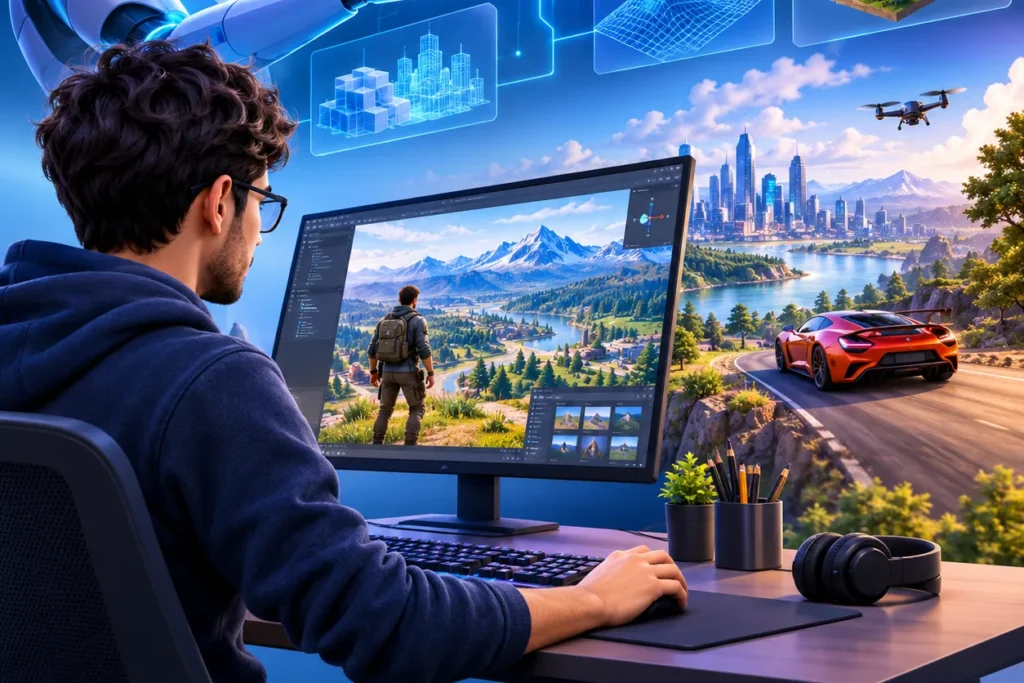
Develop AI-controlled characters that evaluate their surroundings, recognize player actions, and select appropriate responses. Behavioral systems make interactions less predictable and create more believable virtual characters.
Simulation Games Feel More Realistic
Implement physics-based movement, collision detection, object reactions, gravity, and environmental effects. These systems make virtual objects respond consistently to player actions and changing conditions.
Realistic Physics and Environmental Interactions
Generate selected environments, missions, obstacles, and gameplay situations through controlled procedural systems. This approach introduces variation while maintaining the design rules and experience expected from the game.
Procedural Environment and Scenario Generation
Analyze gameplay performance and adjust selected difficulty parameters according to player progress. Adaptive systems can modify opponent strategies, challenge intensity, and progression without removing meaningful player control.
Adaptive Difficulty and Player Intelligence
Combine animation systems, movement logic, and intelligent behavior to create more natural character actions. Context-sensitive animations improve interactions during movement, competition, environmental exploration, and character encounters.
AI-Powered Animation and Character Movement
Use gameplay data and decision systems to anticipate relevant situations, evaluate possible actions, and trigger appropriate responses. These capabilities can make competitive matches and interactive scenarios feel more responsive.
Predictive Gameplay and Real-Time Responses
Six AI Technologies That Make Simulation Games Feel More Realistic
Building Intelligent Simulation Games With Realistic Gameplay Systems
Creating a realistic simulation game requires more than attractive 3D graphics or adding an artificial intelligence feature. The experience depends on how different systems work together. Character behavior must match the environment, physics must support gameplay mechanics, and AI decisions must remain consistent with the rules of the game. If these elements operate independently, interactions can feel artificial even when the visual quality is impressive.
Our AI-Powered Simulation Game Development approach starts with defining the game concept, target audience, core gameplay loop, and expected level of realism. We identify where traditional game logic is sufficient and where intelligent systems can improve the experience. Depending on the requirements, development may involve behavior trees, state machines, pathfinding, procedural generation, machine learning, or generative AI integrations.
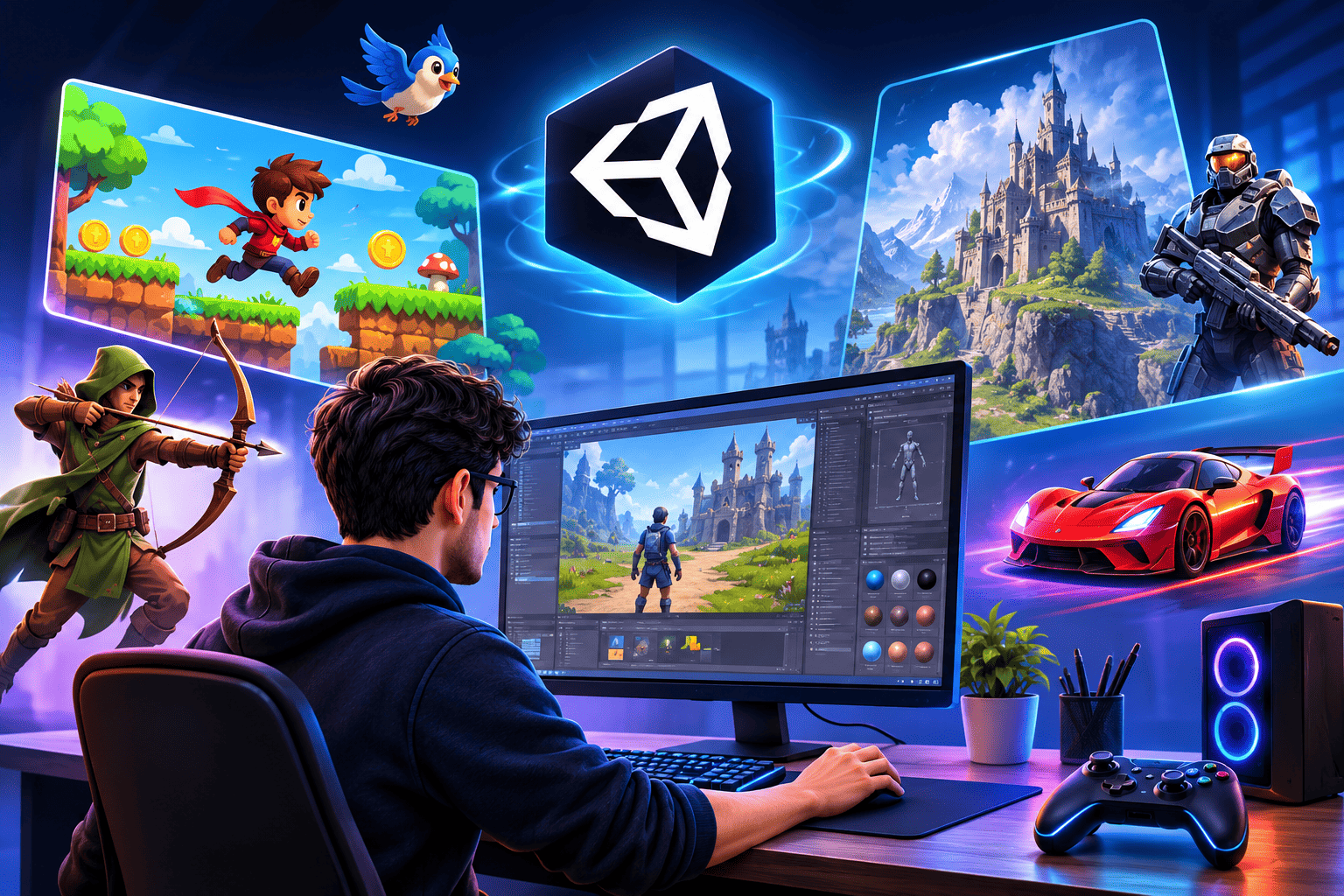
Advanced AI Simulation Game Features for Next-Generation Experiences
Create opponents that evaluate player positioning, previous actions, and gameplay conditions before selecting strategies. These systems can support competitive sports, racing, tactical challenges, and other simulation experiences.
Intelligent Opponent Strategy Systems
Introduce changing weather, lighting, terrain conditions, and environmental effects that influence gameplay. Controlled environmental variables create additional challenges and encourage players to adapt their decisions.
Dynamic Weather and Environmental Conditions
Develop sports experiences with movement mechanics, collision systems, opponent intelligence, and match rules. Applications can include badminton, football, basketball, cricket, racing, and other competitive simulations.
Realistic Sports and Physical Activity Simulations
Integrate intelligent virtual characters that respond to player interactions through contextual dialogue and predefined personality rules. Suitable safeguards help maintain character consistency, response quality, and appropriate content.
Interactive AI Characters and Conversations
Build multiplayer experiences where player actions, character states, physics events, and match information remain synchronized. Networking architecture and server-authoritative validation help maintain consistent gameplay across connected devices.
Multiplayer and Synchronized Simulation Systems
Collect appropriate gameplay events to understand progression, difficulty patterns, player decisions, and system performance. These insights help developers evaluate balancing decisions and improve future game updates.
AI Analytics and Gameplay Optimization
Frequently Asked Questions?
Yes. NPCs can use behavior trees, state machines, utility-based decision systems, or suitable machine learning techniques. Depending on the game, they can navigate environments, interact with objects, respond to players, and follow different behavioral patterns.
Yes. A badminton simulation game can include AI-controlled opponents, realistic shuttlecock physics, racket collision detection, player movement, court positioning, match rules, and adaptive difficulty. The complexity depends on the gameplay style, target platform, and required level of realism.
Yes. Procedural generation can create variations in environments, levels, missions, obstacles, and selected gameplay events. Developers establish constraints and validation rules to ensure generated content remains playable and consistent with the game’s design.
Let's Connect
Ready to Start Your Project?
Let’s discuss how we can help bring your vision to life with our expertise.