
Wear. Connect. Innovate.
Wearable App Development Services for Next-Generation Connected Experiences
Wearable technology is changing how people interact with digital products, monitor activities, access information, and stay connected throughout the day. Our Wearable App Development Services help businesses transform innovative ideas into functional applications for smartwatches, fitness trackers, health devices, and connected wearable products.
Wearable devices are becoming an important part of connected digital experiences. From monitoring daily fitness activities to receiving instant notifications and interacting with connected equipment, these devices allow users to access useful information directly from their wrists and other wearable products. However, creating a successful wearable application requires more than adapting an existing smartphone interface. Developers must consider smaller screens, device compatibility, sensor availability, battery consumption, connectivity limitations, and the way users interact with technology while moving.
We approach every project by understanding the device ecosystem, target audience, and intended application functionality. Our development process considers both the wearable interface and the supporting technology required to make the complete system work. This can include mobile applications, backend services, APIs, databases, and web-based administration dashboards.
Wearable App Development Services That Bring Smart Devices to Life
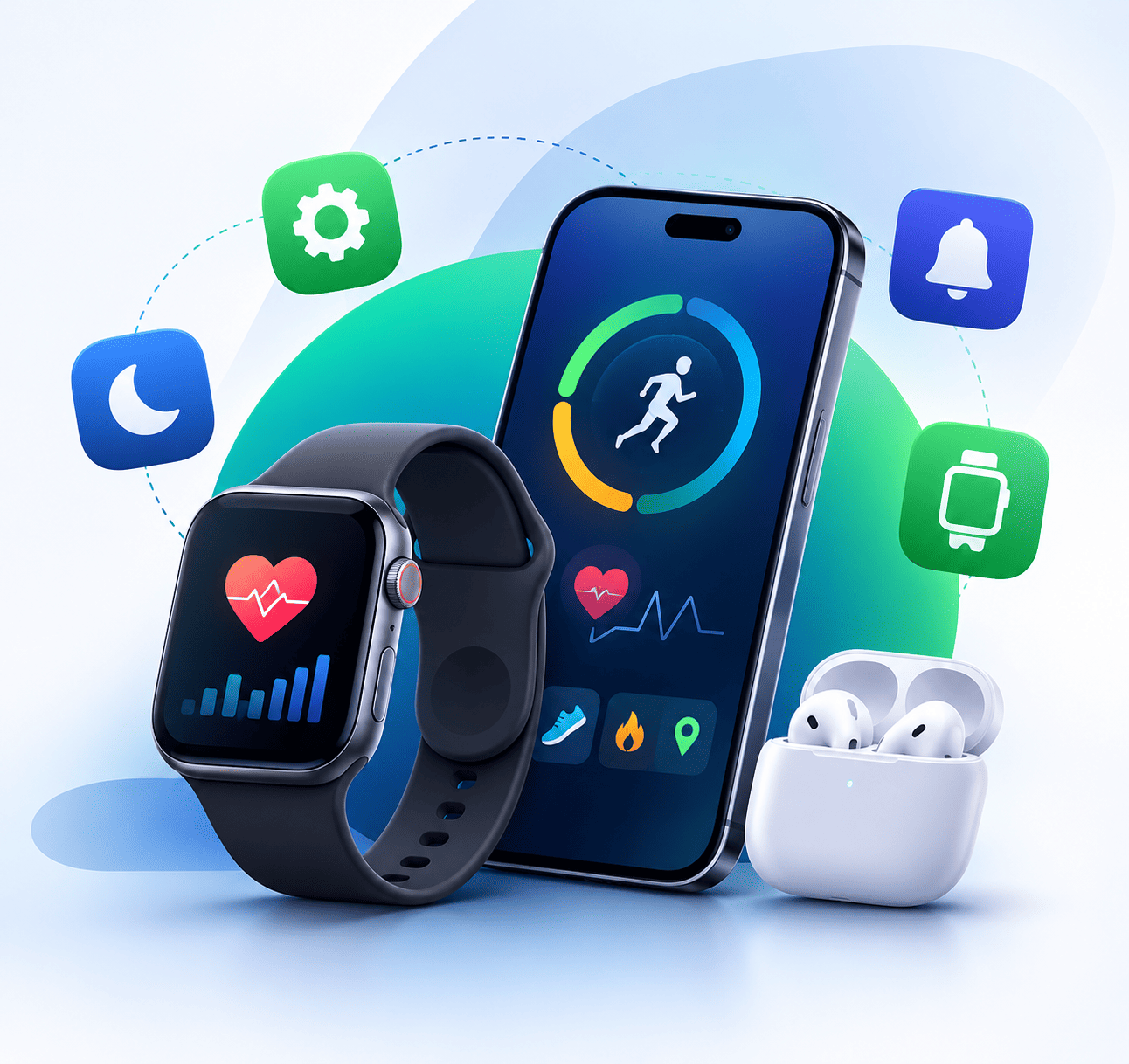
Develop dedicated smartwatch applications with compact interfaces, essential controls, quick interactions, and device-compatible functionality. Design experiences that help users access important features without navigating complicated smartphone-style screens.
Smartwatch Application Development
Connect supported wearable sensors to collect activity information, movement records, workout duration, and fitness metrics. Organize collected information into understandable summaries that support personalized activity experiences and progress monitoring.
Fitness and Activity Tracking Integration
Implement Bluetooth Low Energy connectivity where supported to exchange information between wearable hardware and companion applications. Include connection management, device discovery, synchronization handling, and recovery from temporary connectivity interruptions.
Bluetooth and Device Connectivity
Develop synchronization workflows that transfer relevant information between wearable devices, smartphones, and backend systems. Handle offline conditions, delayed updates, duplicate events, and conflicting records through carefully planned data management.
Real-Time Data Synchronization
Create contextual notifications for reminders, activity updates, device events, and important application activities. Configure notification preferences and delivery conditions to provide useful information without overwhelming users with unnecessary interruptions.
5. Personalized Notifications and Alerts
Build supporting Android and iOS applications that connect wearable experiences with detailed dashboards, account settings, historical information, and device configurations. Provide a consistent experience across supported devices and application environments.
Companion Mobile Application Development
Essential Capabilities Behind Successful Wearable Applications
Custom Wearable App Development for Different Industries and Devices
Wearable technology has applications across multiple industries, and each product requires a different combination of software capabilities. Fitness brands may need workout tracking, activity summaries, and personalized progress information. Healthcare-focused products may require secure health-data handling, device connectivity, authorized information sharing, and carefully validated functionality. Businesses developing industrial wearables may prioritize equipment monitoring, worker notifications, location-related workflows, and communication with operational systems.
We also consider the technical limitations that directly influence wearable performance. Smaller displays require focused navigation, while battery restrictions make unnecessary background operations undesirable. Sensor information must be interpreted according to the capabilities and accuracy of the connected hardware. Network interruptions should not automatically result in missing records or broken user experiences. Testing therefore needs to cover supported devices, operating-system versions, connectivity scenarios, and real-world usage conditions.

Advanced Wearable Application Features for Connected Digital Products
Integrate supported health and wellness information through appropriate platform frameworks and device APIs. Organize permitted metrics into meaningful application views while respecting user consent, permissions, and applicable privacy requirements.
Health and Wellness Data Integration
Implement location-related features for compatible devices, including route information, activity mapping, location updates, and selected tracking workflows. Configure permissions and background location usage according to platform requirements and user preferences.
GPS and Location-Based Functionality
Connect wearable applications with secure backend services for account management, data storage, synchronization, and reporting. Design structured APIs and databases that support growing user activity and additional connected devices.
Cloud Backend and Data Management
Introduce suitable AI capabilities to analyze available activity patterns, personalize application experiences, and generate useful summaries. Clearly distinguish informational insights from medical recommendations and validate outputs against the intended product requirements.
AI-Powered Personalization and Insights
Connect wearable applications with compatible IoT devices, sensors, and connected equipment. Support suitable communication protocols and device-management workflows to create coordinated experiences across multiple connected technology products.
IoT Ecosystem and Smart Device Integration
Optimize interface responsiveness, background processing, data transfers, and resource consumption. Test supported hardware combinations and operating-system versions to identify compatibility problems before application release and subsequent updates.
Performance Optimization and Device Compatibility
Frequently Asked Questions?
Yes. A wearable application can communicate with a companion Android or iOS application through supported platform frameworks, Bluetooth connectivity, APIs, or other appropriate communication methods.
Compatible wearable devices can provide supported information such as activity records, heart-rate measurements, movement information, and other sensor readings.
The cost depends on the application type, target devices, platform requirements, design complexity, sensor integrations, backend functionality, and testing requirements.
Let's Connect
Ready to Start Your Project?
Let’s discuss how we can help bring your vision to life with our expertise.