
Protect. Secure. Trust.
Mobile App Security Implementation for Safer Digital Experiences
Mobile App Security Implementation is essential for protecting user information, preventing unauthorized access, and maintaining the reliability of modern Android and iOS applications. We develop mobile applications with security-focused architecture, protected data handling, secure authentication, and reliable API communication.
Mobile applications frequently handle personal information, account credentials, customer records, business transactions, location details, and other sensitive data. Without appropriate security controls, weaknesses in application code, device storage, network communication, or backend services can expose this information to unauthorized access. A secure mobile application requires more than a login screen or password protection. It needs a carefully designed security architecture that considers how information enters the application, where it is stored, how it is transferred, and which users or services are permitted to access it.
Mobile App Security Implementation addresses these requirements by introducing appropriate safeguards throughout the application lifecycle. From secure coding practices and encrypted communication to authentication controls and vulnerability testing, every component should contribute to a consistent security strategy. At Amunis Technologies, we develop mobile application solutions with security considerations integrated into planning, design, development, and testing.
Mobile App Security Implementation That Protects Every Digital Interaction
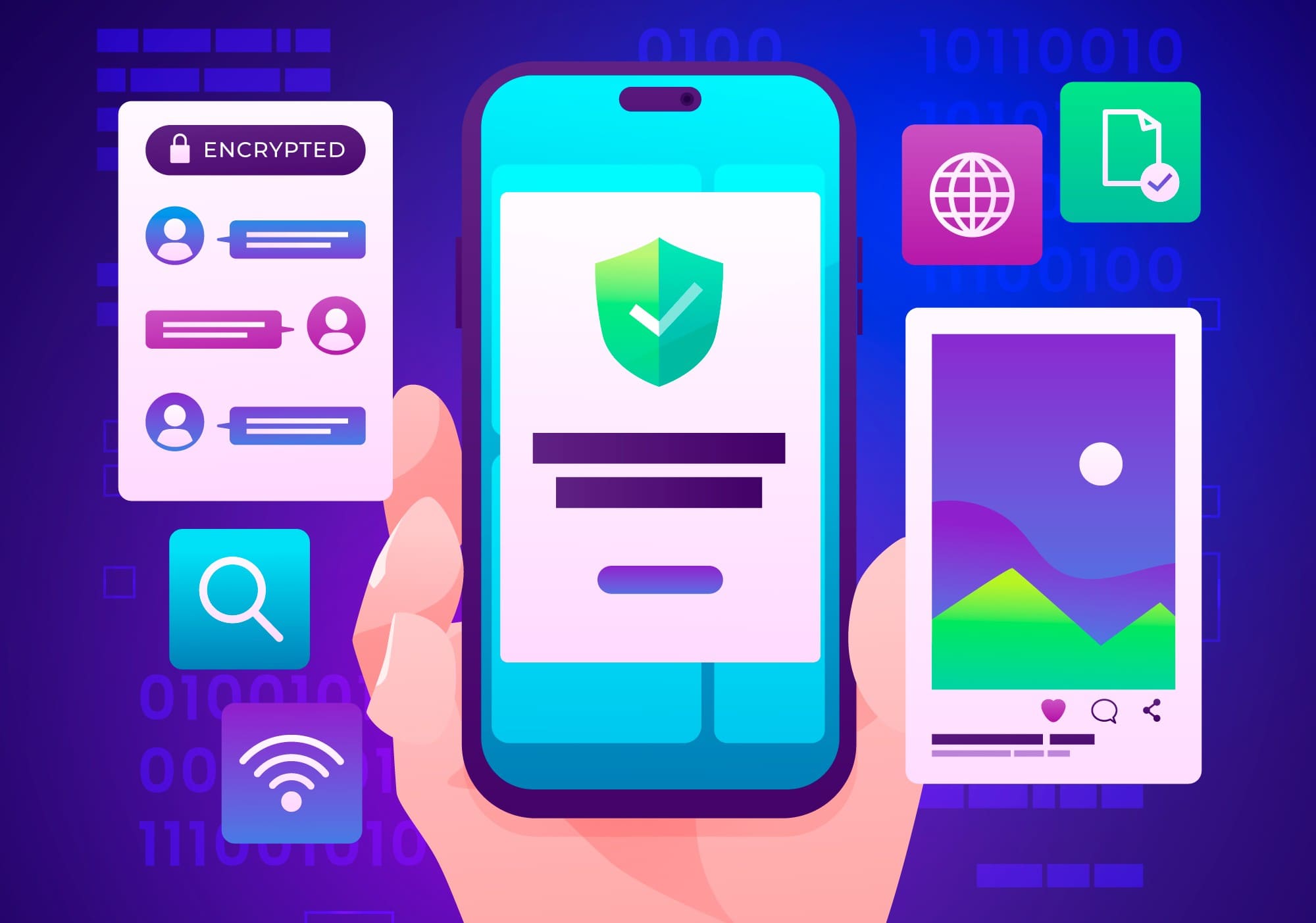
Implement protected login workflows, strong password handling, multifactor authentication, and optional biometric verification. Appropriate authentication controls help prevent unauthorized account access while maintaining a smooth experience for legitimate users.
Secure Authentication and Identity Verification
Protect sensitive information using platform-supported secure storage and suitable encryption mechanisms. Secure key management helps reduce exposure if devices are lost, accessed without permission, or compromised.
Encrypted Data Storage and Protection
Protect application-to-server communication through HTTPS, properly validated certificates, secure tokens, and backend authorization. Server-side permission checks prevent users from accessing information beyond their assigned privileges.
Secure API Communication and Authorization
Manage login sessions using controlled token lifetimes, expiration handling, logout functionality, and permission validation. Additional authentication for sensitive operations helps reduce risks from compromised accounts.
Session Management and Access Control
Evaluate application code, dependencies, API endpoints, and runtime behavior through structured security testing. Identifying weaknesses before deployment helps development teams prioritize fixes and reduce avoidable security exposure.
Application Vulnerability Detection and Testing
Request only necessary device permissions and explain their purpose clearly. Appropriate consent, data minimization, retention controls, and privacy-focused configurations help businesses handle user information responsibly.
Privacy Controls and Permission Management
Six Essential Security Layers for Reliable Mobile Applications
Security-First Mobile Application Development From Architecture to Deployment
Security should influence application architecture before the first major feature is developed. A shopping application, for example, may handle customer profiles, delivery addresses, payment references, and order histories. A business application may contain confidential documents, employee records, and internal communication. Each application has different risks, so applying identical security settings to every project is not an effective approach.
Our development process starts by identifying the information the application handles, understanding its users, mapping important data flows, and identifying possible attack surfaces. Based on these requirements, we plan authentication methods, access permissions, secure storage, network communication, backend validation, and appropriate platform-specific protections. We also consider how mobile applications interact with APIs, databases, external services, and third-party software components.
Advanced Mobile App Protection for Modern Business Applications
Add additional identity verification through supported authentication methods, including one-time codes and device biometrics. Sensitive actions can require stronger verification to provide an additional layer of account protection.
Multi-Factor and Biometric Authentication
Consider application integrity checks, code obfuscation, and suitable runtime protections for higher-risk applications. These controls can make unauthorized modification, reverse engineering, and tampering more difficult.
Runtime Protection and Application Integrity
Protect transaction workflows through verified backend requests, secure payment-provider integrations, and appropriate authorization checks. Sensitive payment information should be handled according to applicable provider and regulatory requirements.
Secure Payment and Transaction Handling
Implement request validation, rate limiting, authorization checks, and controlled error responses across backend endpoints. These measures help reduce unauthorized requests, automated abuse, and exposure of sensitive application data.
API Security and Backend Protection
Review external libraries, SDKs, and application components before integration. Dependency monitoring and timely updates help reduce risks associated with outdated packages and vulnerable third-party functionality.
Third-Party Dependency and SDK Security
Plan recurring security reviews, application updates, vulnerability assessments, and incident-response procedures. Ongoing maintenance helps address newly discovered weaknesses and keeps security controls aligned with evolving requirements.
Continuous Security Monitoring and Maintenance
Frequently Asked Questions?
A mobile application should include security measures appropriate to its functionality and risk level. Common requirements include secure authentication, HTTPS communication, protected local storage, server-side authorization, session expiration, input validation, secure API integration, and dependency management. Applications handling sensitive information may require additional testing and stronger protection mechanisms.
Sensitive information should be minimized and stored only when necessary. Platform-supported security mechanisms such as Android Keystore and Apple Keychain can help protect cryptographic keys and credentials. Appropriate encryption, secure access controls, backup configurations, and careful handling of cached data and application logs also help reduce accidental exposure.
Secure API integration protects communication between the mobile application and backend services. HTTPS, appropriate token management, request validation, rate limiting, and server-side authorization help protect information and restrict unauthorized operations. Backend systems must independently verify user permissions rather than trusting information supplied by the mobile application.
Let's Connect
Ready to Start Your Project?
Let’s discuss how we can help bring your vision to life with our expertise.