
Serve. Spike. Dominate.
Build a Volleyball Game Development Experience That Players Love
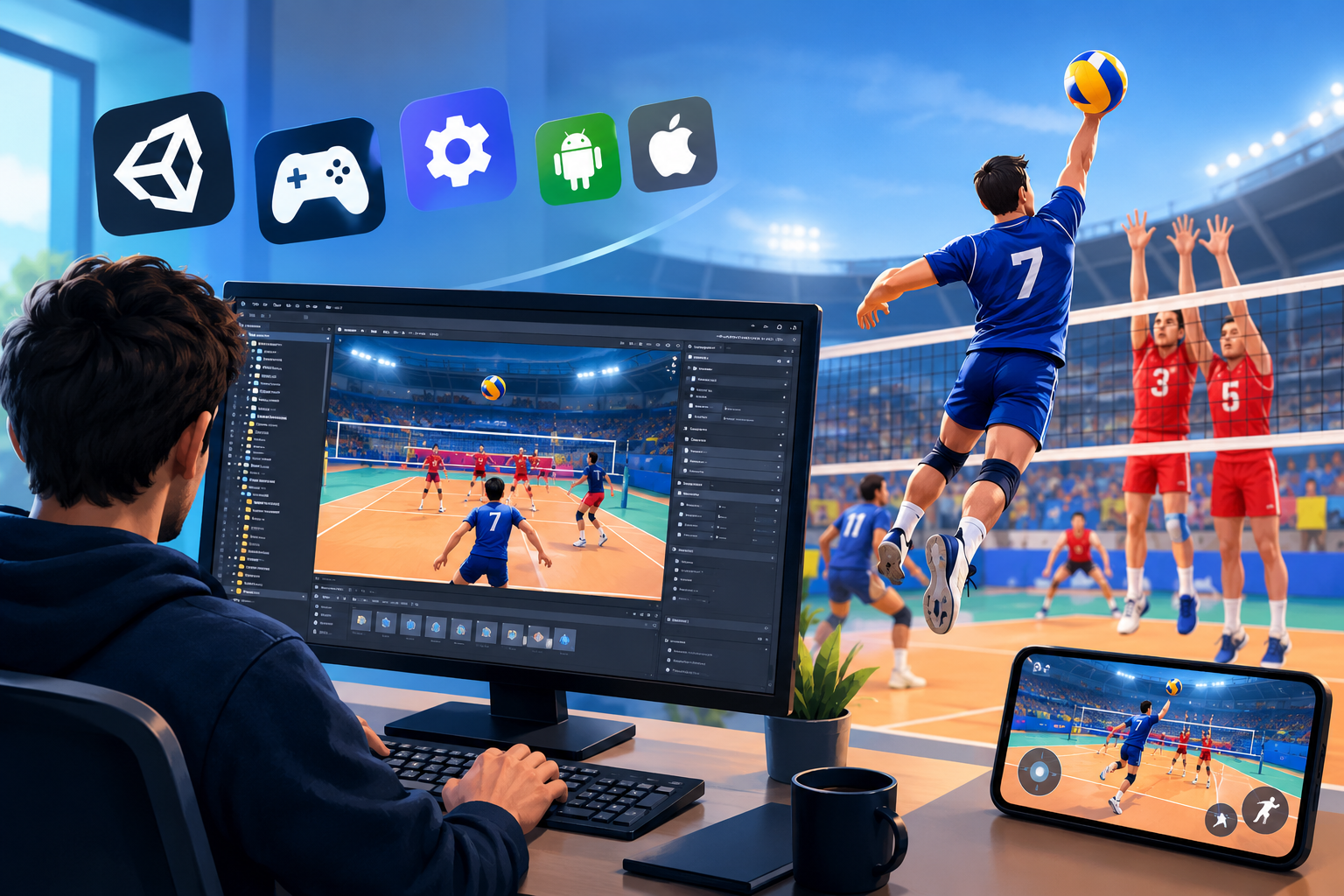
Build a volleyball game development experience that combines exciting rallies, responsive controls, competitive gameplay, and engaging progression. At Amunis Technologies, we develop custom sports games tailored to your concept, target audience, and preferred platforms.
Volleyball offers an exciting foundation for interactive sports gaming because every rally combines timing, positioning, teamwork, and quick decision-making. Players must serve accurately, receive the ball, set up attacks, block opponents, and defend against powerful spikes. Translating these moments into a successful video game requires more than attractive graphics. The gameplay mechanics, control system, ball movement, player animations, artificial intelligence, and match rules must work together to create an experience that feels satisfying from the first serve to the final point.
Our development process considers both player experience and technical requirements. Touchscreen controls should feel natural on mobile devices, while keyboard, controller, or VR interactions may require different input designs. Ball physics and animation timing need careful tuning, and multiplayer games require dependable synchronization between players. We also consider device performance, testing, future content updates, and the systems needed to support the game after launch.
Build a Volleyball Game Development Project Around Unique Gameplay
Develop serving, receiving, setting, spiking, blocking, and diving mechanics with carefully tuned timing and feedback. Responsive actions make rallies feel rewarding while preserving meaningful player skill.
Responsive Volleyball Gameplay Mechanics
Create ball trajectories, collisions, jumps, and contact animations that suit the game’s style. Consistent physics and readable movements help players understand each rally and improve control.
Realistic Ball Physics and Player Animations
Design AI players that position themselves, respond to ball movement, select appropriate actions, and adjust difficulty. Balanced behaviour creates challenging matches without making opponents feel unfair.
Intelligent Opponent AI and Team Behaviour
Support suitable formats such as quick matches, tournaments, practice sessions, career progression, or beach volleyball. Configurable match settings create variety and encourage players to return.
Multiple Match Modes and Game Rules
Introduce unlockable outfits, player attributes, achievements, skill upgrades, and team customization where appropriate. Meaningful progression rewards continued play without compromising competitive balance.
Character Customization and Player Progression
Build intuitive touchscreen controls, readable scoreboards, clear action indicators, and accessible menus. Responsive interfaces help players understand match situations quickly and perform actions with confidence.
Mobile-Friendly Controls and Interface Design
Six Essential Features to Build a Volleyball Game Players Enjoy
Custom Volleyball Game Development From Concept to Launch
Every volleyball game requires a different combination of mechanics, presentation, and technology. An arcade title may prioritize fast rallies, exaggerated spikes, special abilities, and short sessions. A simulation-focused game may require more detailed movement, player positioning, tactical decisions, and carefully tuned ball interactions. A management game places greater emphasis on team selection, player development, strategy, and match outcomes. Identifying the right direction early helps prevent unnecessary development work and keeps the project aligned with its intended audience.
We recommend validating the core experience before investing heavily in secondary features. A playable prototype can help assess movement, ball control, camera behaviour, collision handling, and rally pacing. Once the fundamental mechanics feel right, the project can expand into additional modes, customization, progression, competitive features, and content updates.

Advanced Volleyball Game Features for Long-Term Player Engagement
Develop online matches with suitable networking architecture, lobby management, matchmaking, and connection recovery. Competitive systems should prioritize fair play, stable synchronization, and consistent match outcomes.
Online Multiplayer and Competitive Matchmaking
Create structured competitions with fixtures, progression, rewards, standings, and championship objectives. Career systems can give players longer-term goals beyond individual matches and encourage meaningful advancement.
Tournament, League, and Career Systems
Design different courts, lighting conditions, surface materials, stadiums, and beach locations. Environment variations provide visual diversity while allowing gameplay rules and movement to reflect the selected volleyball format.
Indoor and Beach Volleyball Environments
Implement suitable monetization through cosmetic purchases, optional rewarded advertisements, premium editions, or other platform-approved models. Pricing, progression, and rewards should preserve player trust and maintain a balanced experience.
Monetization and Optional In-Game Purchases
Track relevant metrics such as match outcomes, serving accuracy, successful attacks, player progression, and session activity. Useful analytics help identify gameplay issues and guide evidence-based improvements after launch.
Player Statistics, Rankings, and Game Analytics
Prepare builds for selected platforms, optimize asset loading, and plan compatibility testing. Where the architecture permits, modular content and controlled updates make it easier to introduce new courts, events, characters, and gameplay improvements.
Cross-Platform Optimization and Live Updates
Frequently Asked Questions?
Yes. A volleyball game can be designed for Android and iOS with touchscreen controls, mobile-friendly interfaces, optimized assets, and suitable performance targets. The final platform scope depends on your requirements, selected technology, and device compatibility goals.
Yes. A realistic 3D project can include detailed courts, animated players, ball physics, player positioning, tactical AI, and immersive presentation. The level of realism depends on the design goals, available assets, performance targets, and development budget.
Yes. Online multiplayer can support head-to-head matches, team competitions, private lobbies, matchmaking, rankings, and tournaments. The architecture should account for latency, synchronization, cheating prevention, server costs, and connection failures.
Let's Connect
Ready to Start Your Project?
Let’s discuss how we can help bring your vision to life with our expertise.