
Rally. Compete. Conquer.
Build a Badminton Game That Delivers an Exciting Sports Experience
Whether you envision a casual mobile badminton game, a realistic 3D sports simulation, or a multiplayer competition, we help transform your idea into an interactive gaming product designed for performance, replayability, and long-term growth.
Badminton is a fast-paced sport built around timing, movement, precision, and strategy. Translating that experience into a digital game requires more than designing a court and adding animated players. Every rally depends on how the shuttle travels, how players position themselves, how racket swings connect with the shuttle, and how quickly the game responds to player input. When these mechanics work together, they create a more satisfying experience that encourages players to improve their skills and return for another match.
When you build a badminton game with Amunis Technologies, the development process can be tailored to your intended audience and business objectives. We can help plan gameplay mechanics, player controls, court environments, character animations, scoring systems, artificial intelligence opponents, and multiplayer functionality according to your project requirements. The concept might focus on quick casual matches, realistic singles and doubles competitions, career progression, or online tournaments. Each direction requires a different balance of technical complexity, visual design, and player engagement.
Build a Badminton Game With Realistic Gameplay
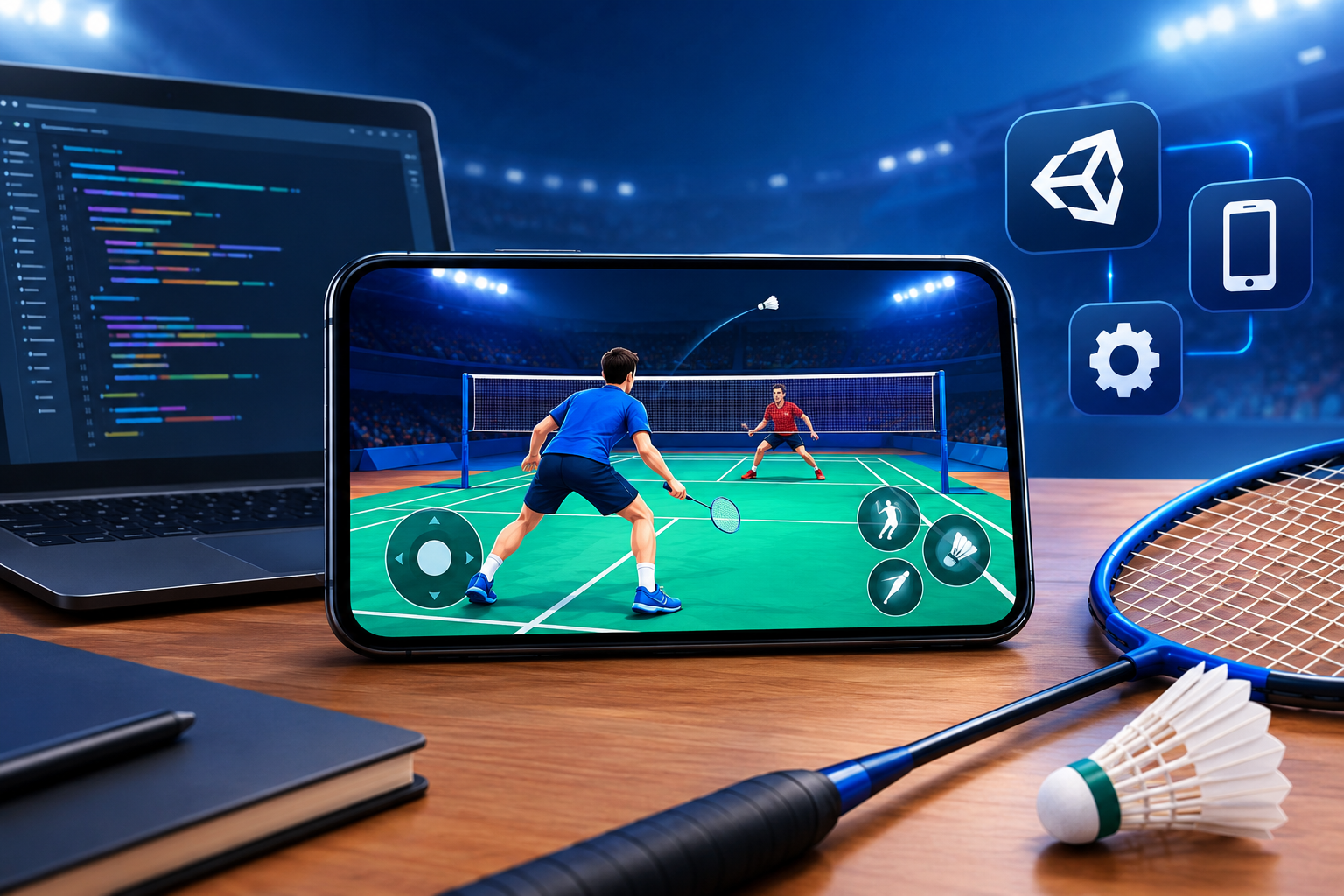
Develop shuttle movement, flight trajectories, collision detection, and racket contact responses that make clears, drops, drives, and smashes feel distinct and responsive during gameplay.
Realistic Shuttle Physics and Racket Interaction
Create intuitive movement, directional positioning, racket swings, jumping, and recovery actions. Well-tuned controls help players react naturally to fast rallies without unnecessary input complexity.
Responsive Player Controls and Movement
Design computer-controlled opponents with adjustable difficulty, court awareness, shot selection, and movement patterns. Different AI styles provide fresh challenges as players progress through the game.
Intelligent AI Opponents
Support the game formats appropriate to your concept, including singles competitions, doubles matches, practice sessions, quick games, and structured tournaments with configurable rules.
Singles, Doubles, and Match Modes
Allow players to unlock or select characters, outfits, racket designs, and other appropriate cosmetic items. Progression rewards can make achievements meaningful without compromising competitive balance.
Character Customization and Progression
Implement configurable scoring rules, match history, rally outcomes, player statistics, and tournament standings. Accurate match records help players understand performance and track improvement over time.
Scoring, Statistics, and Match Results
Six Essential Features to Build a Badminton Game Players Enjoy
Custom Badminton Game Development From Concept to Launch
A successful badminton game begins with a clear gameplay concept. Before development starts, we identify the intended audience, preferred visual style, target platforms, game modes, and expected level of realism. A casual mobile title may prioritize short matches, simple controls, and quick progression. A competitive sports simulation may require more detailed player movement, accurate shot timing, advanced opponent behaviour, and carefully balanced mechanics. Defining these requirements early helps establish a practical scope and prevents unnecessary features from complicating the core experience.
Testing is particularly important in sports games because small control or physics issues can affect the entire match experience. We evaluate input responsiveness, collision behaviour, camera movement, frame-rate stability, match-state transitions, and device compatibility. Multiplayer projects also require testing for connection interruptions, synchronized match states, matchmaking behaviour, and recovery from network problems.

Six Advanced Features That Make a Badminton Game Stand Out
Enable players to compete online through suitable multiplayer architecture, session management, and matchmaking. Connection handling and synchronization must be designed around the game’s competitive requirements.
Real-Time Multiplayer and Online Matchmaking
Create structured competitions, achievement milestones, rankings, and career challenges. A progression system gives players meaningful objectives beyond individual matches and supports longer-term engagement.
Tournament and Career Progression
Introduce indoor arenas, training courts, competition venues, and varied visual themes. Carefully optimized environments provide variety while maintaining clear shuttle visibility and consistent gameplay performance.
Multiple Courts and Visual Environments
Add tutorials, practice drills, reaction challenges, shot accuracy exercises, and guided gameplay lessons. These features help new players learn controls while giving experienced players opportunities to refine their technique.
Training Modes and Skill Challenges
Track achievements, match results, player statistics, and competitive rankings. Online leaderboards can encourage friendly competition when scoring rules, data validation, and fair-play safeguards are implemented appropriately.
Player Profiles, Rankings, and Leaderboards
Plan device-specific controls, interface scaling, asset quality, and performance budgets for supported platforms. Cross-platform releases require compatibility testing and may need platform-specific adjustments to deliver a consistent experience.
Cross-Platform Support and Performance Optimization
Frequently Asked Questions?
Core features typically include player controls, shuttle physics, scoring, match rules, animations, and an opponent system. Depending on your goals, you can also include multiplayer, tournaments, character customization, leaderboards, training modes, and career progression.
Yes. A multiplayer badminton game can support private matches, online matchmaking, competitive rankings, and other social features. The architecture depends on the expected number of players, real-time synchronization requirements, target platforms, and infrastructure budget.
Yes. AI opponents can be designed with different skill levels, movement patterns, reaction times, shot choices, and tactical behaviours. Their difficulty can be adjusted to create a progression that challenges players without making early matches unnecessarily frustrating.
Let's Connect
Ready to Start Your Project?
Let’s discuss how we can help bring your vision to life with our expertise.