
Built For AI
Optimizing Your Website for Generative AI starts With Better Website Architecture
enerative AI is changing how people discover businesses, products, and information online. Optimizing your website for generative AI means building a website that is easy for search engines and AI-powered search experiences to crawl, understand, verify, and connect with user intent.
Optimizing your website for generative AI is not simply about adding AI-related keywords to your pages. Modern search systems need to understand what your business does, which problems you solve, what information your pages provide, and how trustworthy that information is. Google’s current guidance states that generative AI search features continue to rely on core Search systems, meaning strong SEO fundamentals remain important for AI Overviews and AI Mode.
A well-developed website therefore needs more than attractive visuals. Its navigation, headings, internal links, page hierarchy, HTML structure, metadata, content, images, performance, and mobile experience should work together. Important information should be accessible to crawlers and users without unnecessary technical barriers. This creates a clearer relationship between your services, supporting content, brand information, and customer questions.
Optimizing Your Website for Generative AI for Smarter Search Visibility

Search visibility begins with accessibility. Important pages should be crawlable, indexable, internally connected, and technically available to search systems. Avoid hiding essential business information behind unnecessary scripts, blocked resources, or inaccessible navigation.
Build Crawlable and Indexable Website Pages
AI systems can summarize information that already exists, so generic content provides limited differentiation. Publish original insights, practical explanations, first-hand experience, examples, processes, and genuinely useful information that demonstrates subject knowledge.
Create Original, Expert-Led Content
Customers increasingly search conversationally. Structure pages around questions, problems, comparisons, use cases, and decisions your audience actually makes. Clear H2 and H3 headings help people and search systems understand the relationship between topics.
Organize Content Around Real Questions
Connect related service pages, blogs, case studies, FAQs, and supporting resources. Internal links help visitors discover relevant information while establishing logical relationships between important topics across your website.
Strengthen Internal Linking and Topic Relationships
A visually impressive website still needs to provide a reliable experience. Responsive layouts, efficient assets, fast loading, readable content, intuitive navigation, and stable interactions help users access your information across different devices and connection conditions.
Improve Performance and Mobile Experience
Clearly explain who you are, what you provide, how your service works, and why customers can trust your business. Author information, company details, project experience, contact information, original examples, and transparent service descriptions can strengthen overall website credibility.
Make Business Information Easy to Verify
essential Elements for Optimizing Your Website for Generative AI
How Amunis Technologies Builds AI-Ready Business Websites
A website prepared for modern AI search should not be treated as a collection of isolated pages. It should operate as a connected digital knowledge system where service pages explain solutions, blogs answer customer questions, portfolio pages demonstrate experience, and supporting content establishes topical depth. This approach gives users multiple paths to discover useful information while creating a clearer relationship between your business and the topics you serve.
Our approach begins with understanding your business, audience, services, competitors, and search intent. We then translate those requirements into a website architecture that supports both users and search discovery. Navigation, page hierarchy, content sections, internal links, metadata, responsive design, image optimization, technical SEO, and conversion elements are considered together rather than treated as separate tasks.
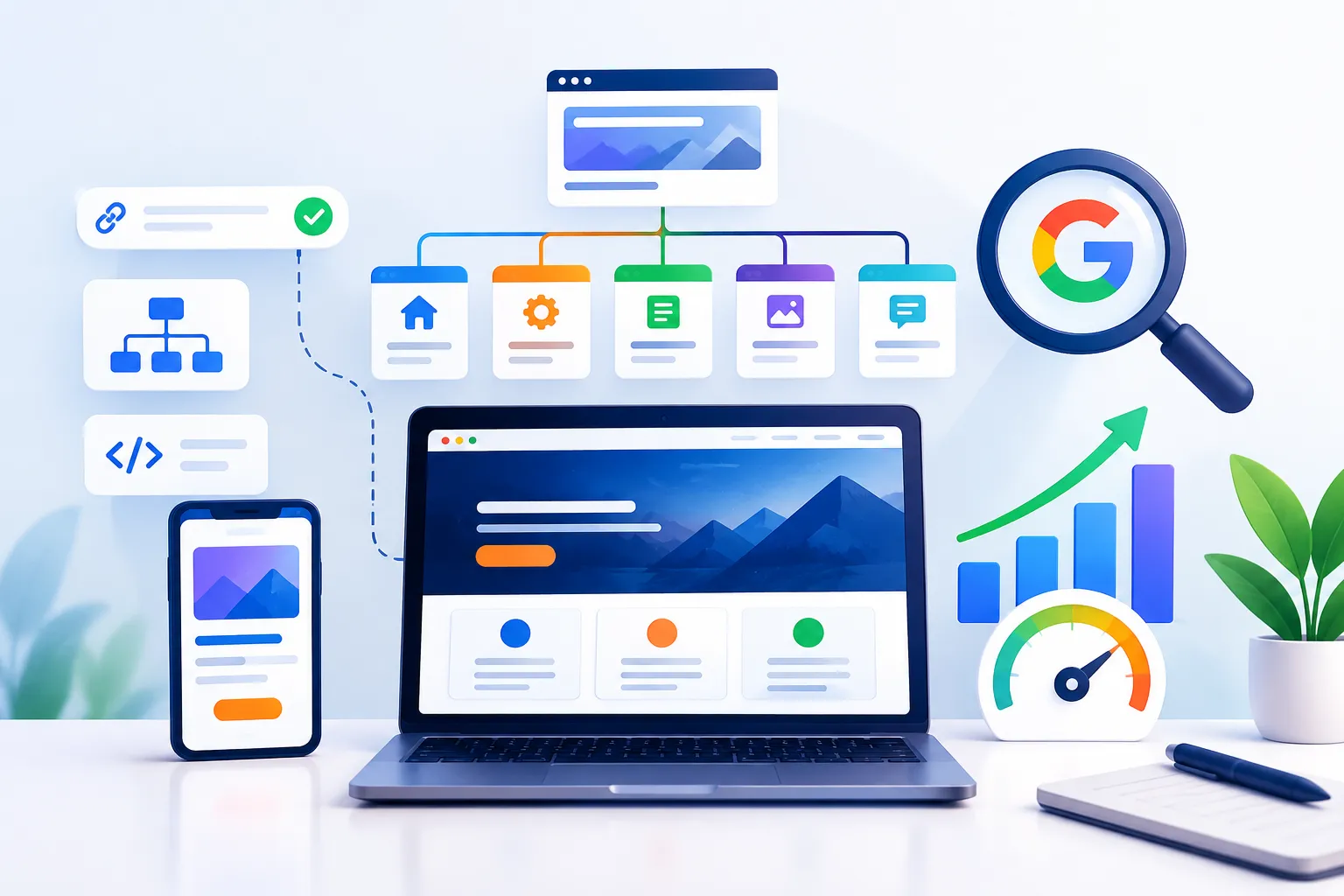
Advanced Strategies for AI-Ready Website Development
A page should satisfy the reason someone searched rather than simply repeat a keyword. Informational, commercial, navigational, and transactional visitors need different content experiences. Matching intent improves usefulness and makes pages easier to understand.
Design Content Around Search Intent
Create connected content around important business subjects. A core service page can connect with educational blogs, FAQs, comparisons, implementation guides, case studies, and supporting resources to establish comprehensive topical coverage.
Build Strong Topic Clusters
Write headings that communicate exactly what the following section explains. Follow them with concise, useful answers before expanding into supporting detail. This improves scanning for users while giving search systems clearer contextual signals.
Use Descriptive Headings and Clear Answers
Replace generic statements such as “we provide the best solution” with concrete information. Explain processes, technologies, deliverables, project examples, methodologies, limitations, and expected workflows so visitors can evaluate your expertise.
Add Evidence Instead of Empty Claims
Relevant images can improve comprehension and provide additional discovery opportunities. Use descriptive filenames and useful ALT text, compress media appropriately, and ensure visual content genuinely supports the surrounding information rather than existing only for decoration.
Optimize Images and Multimedia
AI-search optimization is not a one-time implementation. Monitor Search Console data, organic queries, indexed pages, engagement, conversions, content performance, and available generative AI visibility data. Refresh outdated information and improve pages based on evidence rather than chasing every new optimization trend.
Measure, Improve, and Refresh
Frequently Asked Questions?
Optimizing your website for generative AI means improving its technical accessibility, content quality, structure, relevance, and credibility so modern search systems can discover, understand, and potentially use its information when generating answers.
Yes. Google states that its generative AI search experiences are built on core Search systems, so established SEO fundamentals remain important. Crawlability, useful content, technical accessibility, page experience, and clear organization continue to matter.
No legitimate SEO or web development process can guarantee a particular AI citation, recommendation, or Google ranking. Search systems determine which information is displayed based on many factors, and Google states that meeting its requirements does not guarantee crawling, indexing, or serving.
Let's Connect
Ready to Start Your Project?
Let’s discuss how we can help bring your vision to life with our expertise.