
Attract. Engage. Grow.
How to Increase Organic Website Traffic Without Paid Ads
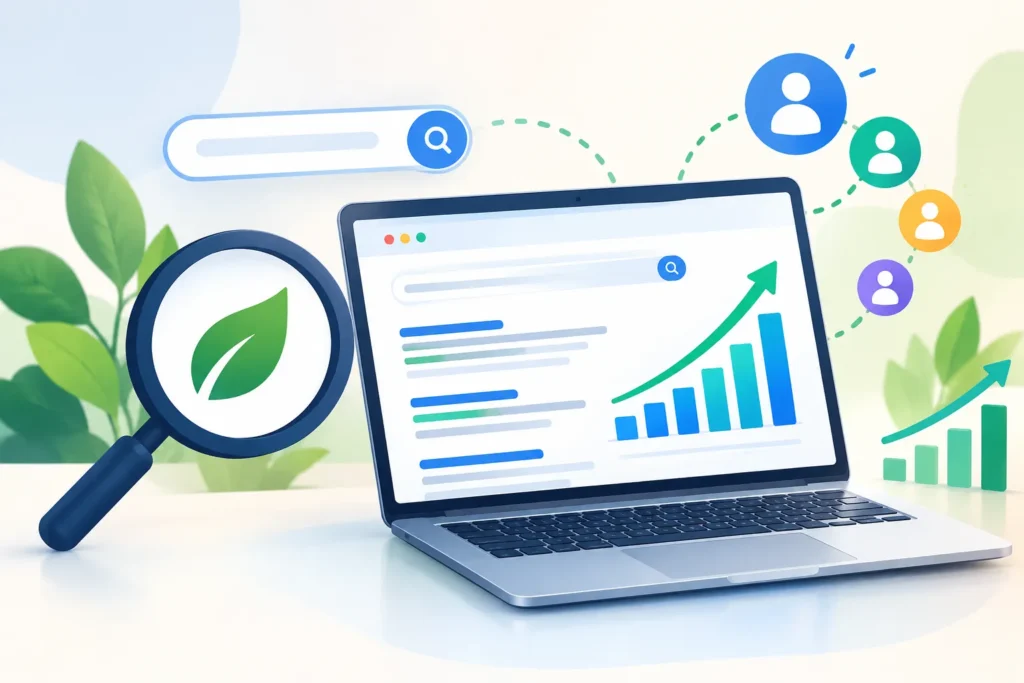
Through strategic keyword research, helpful content, technical SEO, better website performance, and relevant internal linking, businesses can improve search visibility and attract potential customers who are actively looking for their services.
Organic website traffic refers to visitors who reach your website through unpaid search engine results. These visitors may discover your business while searching for information, comparing services, researching solutions, or looking for a company that can solve a specific problem. Unlike paid advertising, organic search visibility depends on how well your website satisfies relevant searches and meets search engine requirements.
To improve organic website traffic, businesses need more than a collection of blog posts or repeated keywords. They need a clear strategy that connects customer search intent with useful website content, technically accessible pages, intuitive navigation, and meaningful conversion opportunities. A well-structured website helps visitors find answers, understand your services, and take the next step without unnecessary friction.
Improve Organic Website Traffic With a Smarter SEO Strategy
Research the exact questions your customers ask before choosing a service. Prioritize relevant keywords that match their needs, business goals, and decision-making stage rather than chasing search volume alone.
Target Search Intent With Relevant Keywords
Create detailed service pages, practical tutorials, comparison guides, and answers to customer questions. Original examples and useful recommendations give readers stronger reasons to visit, engage with, and revisit your website.
Publish Helpful and Original Content
Write descriptive page titles, relevant headings, compelling meta descriptions, and clear URLs. Accurate search snippets help users understand your content and decide whether your page answers their query.
Optimize Titles, Headings, and Meta Descriptions
Check crawling, indexing, canonical URLs, broken links, redirects, and XML sitemaps. Resolve technical barriers that prevent important pages from being discovered, processed, or displayed appropriately in search results.
Fix Technical SEO and Indexing Problems
Build responsive pages, optimize image sizes, reduce unnecessary scripts, and improve loading performance. A smooth browsing experience helps visitors access information comfortably across mobile phones, tablets, and desktop devices.
Improve Website Speed and Mobile Usability
Link relevant blog posts, service pages, and supporting resources using descriptive anchor text. A logical internal linking structure helps visitors discover related information and allows search engines to understand relationships between pages.
Use Internal Links to Connect Related Content
Six Practical Ways to Improve Organic Website Traffic
How to Improve Organic Website Traffic With Long-Term SEO Planning
Sustainable search growth begins with understanding what your audience needs and how your website can meet those needs better. Start by reviewing your most important service pages and existing blog posts. Identify pages that receive impressions but attract few clicks, pages that rank for relevant queries without generating enquiries, and valuable topics that your website has not covered adequately. This initial review often reveals opportunities to improve existing assets before investing time in creating entirely new pages.
Next, organize your content around related subjects. A website development company, for example, can build a connected resource library covering website design, WordPress development, website indexing, technical SEO, performance optimization, and conversion improvements. Each article should address a distinct search intent and link naturally to the relevant supporting resources or service pages.

Advanced SEO Practices to Improve Organic Website Traffic
Update outdated instructions, examples, screenshots, statistics, and service details when changes genuinely improve accuracy. Strengthening an established page can be more useful than publishing another article covering the same subject.
Refresh Existing Pages With New Insights
Develop a central resource supported by related articles addressing specific customer questions. Connect these pages logically so readers can explore a subject in greater depth and discover relevant services.
Build Topic Clusters Around Your Services
Publish original resources, useful research, and practical guides that other relevant websites may want to reference. Genuine editorial links can help establish credibility, while purchased or manipulative link schemes create risks.
Earn Relevant Backlinks and Brand Mentions
Use descriptive filenames, relevant alt text, appropriately sized images, and modern formats such as WebP where suitable. Helpful visuals can explain complex ideas, improve usability, and create additional discovery opportunities.
Optimize Images and Supporting Media
For businesses serving a defined area, maintain accurate business information and a complete Google Business Profile when eligible. Relevant local pages and consistent contact details can help potential customers discover nearby services.
Strengthen Local and Business Visibility
Add relevant service links, clear calls to action, useful contact forms, and concise explanations of your expertise. Turn suitable organic visits into enquiries without interrupting readers who are still researching their options.
Improve Conversion Paths on High-Traffic Pages
Frequently Asked Questions?
The timeline varies according to website history, competition, technical issues, content quality, and search demand. Some improvements may affect performance sooner, while building meaningful visibility for competitive queries can take several months or longer.
Yes. Publishing frequently is not a requirement for success. Prioritize useful content, improve existing pages, resolve technical issues, and publish new resources when they address meaningful customer needs or search opportunities.
Google Search Console helps monitor search queries, clicks, impressions, and indexing information. Google Analytics can help analyze visitor behavior and conversions. WordPress users can also use Rank Math SEO to manage many on-page optimization tasks.
Let's Connect
Ready to Start Your Project?
Let’s discuss how we can help bring your vision to life with our expertise.