
Organize. Connect. Improve
Hospital Management Admin Panel for Efficient Healthcare Operations
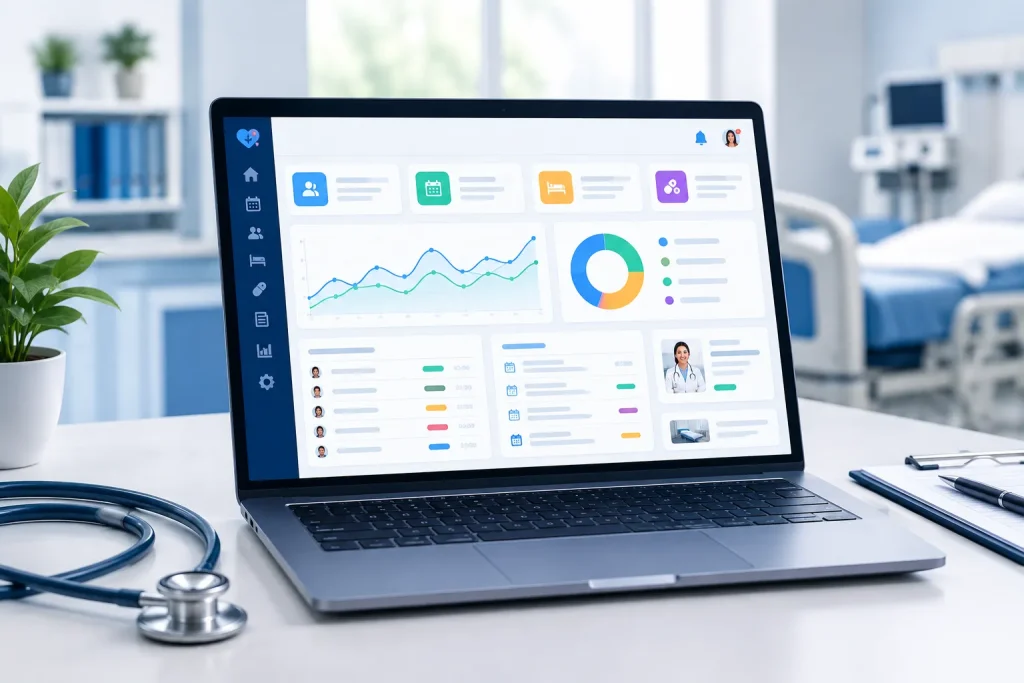
A Hospital Management Admin Panel provides a centralized platform to coordinate hospital administration, patient registration, appointments, staff activities, billing, inventory, and operational reporting.
At Amunis Technologies, we develop custom hospital administration dashboards based on your organization’s structure, workflows, and technical requirements. The solution can include patient registration, appointment coordination, doctor schedules, admission tracking, billing administration, pharmacy inventory, staff management, reporting, and user permissions. Modules can be selected according to the hospital’s actual requirements rather than introducing unnecessary functionality.
Our approach focuses on intuitive navigation, organized data, dependable integrations, and maintainable development. Administrators should be able to locate information quickly, monitor pending activities, and manage authorized operations without navigating through unrelated screens. By connecting suitable modules through a thoughtfully planned system, we help healthcare organizations establish a more structured approach to administration while keeping patient privacy and operational reliability central to the design.
Hospital Management Admin Panel Development for Connected Healthcare Workflows
Manage patient registration, demographic information, visit histories, and administrative records through a structured interface. Validation and duplicate-record checks help authorized staff maintain consistent information across supported hospital workflows.
Patient Registration and Record Administration
Organize doctor availability, consultation schedules, appointment statuses, and department calendars. Clear scheduling workflows help reception teams coordinate bookings, identify changes, and manage daily patient appointments more efficiently.
Appointment Scheduling and Doctor Coordination
Track inpatient admissions, ward assignments, bed availability, transfers, and discharge-related administrative tasks. Centralized visibility helps authorized teams coordinate capacity and maintain accurate operational records across hospital departments.
Admission, Discharge, and Bed Management
Manage invoices, service charges, payment statuses, and billing records through organized administrative workflows. Configurable approvals and transaction histories help accounts teams review financial activity and investigate discrepancies when necessary.
Billing and Financial Administration
Monitor medicine stock, medical supplies, purchase records, batch information, and expiry dates where required. Stock alerts and controlled inventory updates help teams identify replenishment needs and improve supply visibility.
Pharmacy and Inventory Management
Organize staff profiles, department assignments, schedules, and administrative responsibilities. Role-based permissions help ensure receptionists, clinicians, pharmacists, accountants, and administrators access only the functions authorized for their roles.
Staff Management and Role-Based Access
Essential Features of a Hospital Management Admin Panel
Custom Hospital Management Admin Panel Development Built Around Your Facility
Every healthcare facility operates differently. A small clinic may prioritize appointments, patient registration, consultation administration, and billing. A multispecialty hospital may require additional coordination across wards, laboratories, radiology, pharmacy, insurance desks, and multiple administrative teams. A hospital group may also need consolidated reporting, branch-level permissions, and centralized configuration. The administration panel should reflect these differences while keeping everyday tasks understandable for each user.
Our development process begins by identifying your operational requirements, existing systems, staff roles, and information flows. We map the necessary modules, plan the dashboard hierarchy, define how records relate to each other, and establish which integrations are needed.
Advanced Hospital Admin Panel Features for Better Operational Control
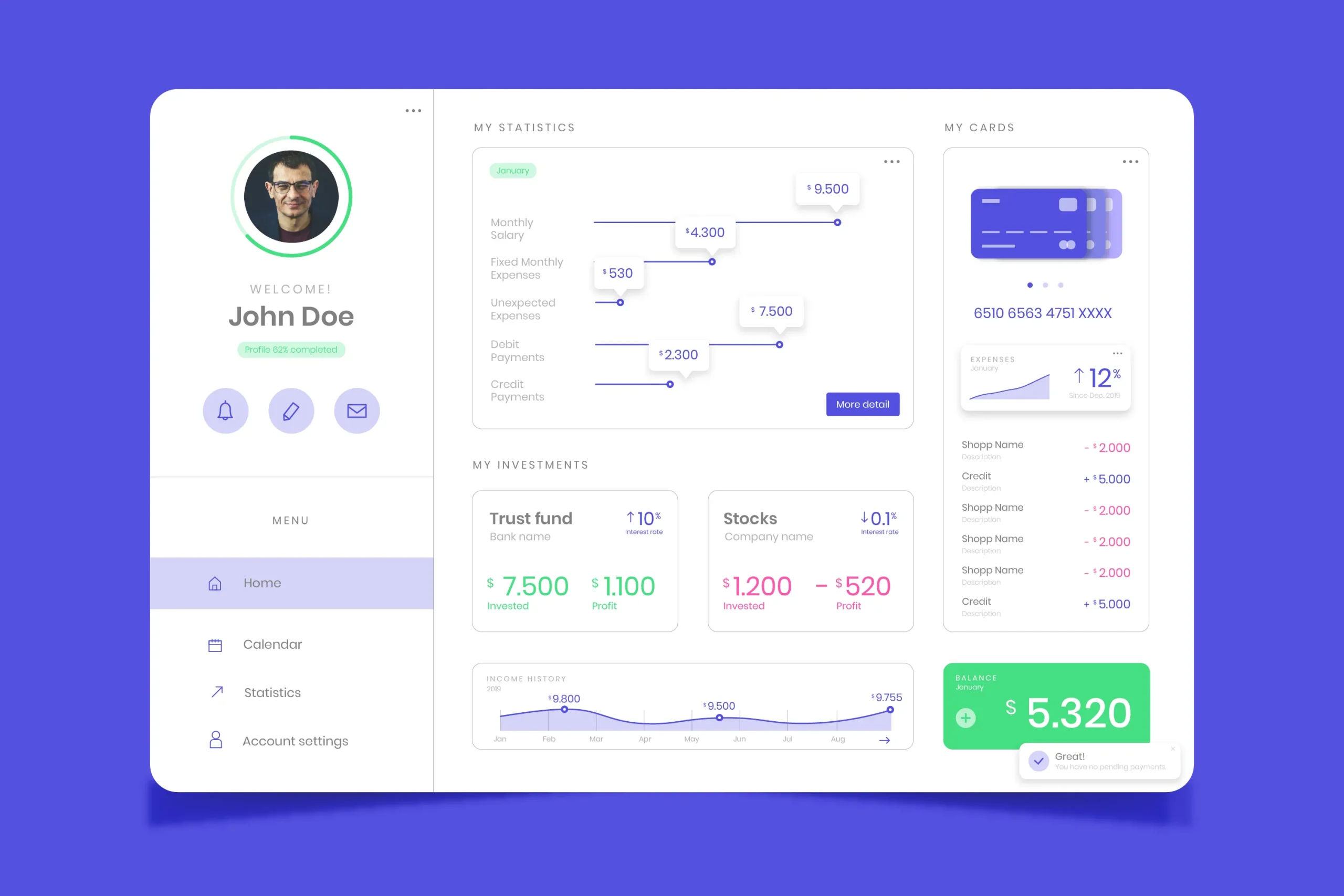
Present relevant indicators such as appointments, admissions, bed occupancy, pending administrative tasks, and billing summaries. Carefully selected metrics help hospital managers identify operational priorities without searching through multiple reports.
Real-Time Operational Dashboards
Connect compatible laboratory or diagnostic systems to support test-order tracking, report availability, and related administrative updates. Integration depends on the existing systems, supported interfaces, data formats, and authorized access arrangements.
Laboratory and Diagnostic Workflow Integration
Provide controlled access to relevant patient information and administrative records across approved workflows. Structured information sharing can reduce duplicate entry while preserving the permissions and responsibilities assigned to different healthcare professionals.
Medical Records and Department Coordination
Configure reminders for appointments, pending approvals, stock replenishment, and selected administrative activities. Clear notification rules help teams follow up on important tasks while minimizing unnecessary alerts and duplicate messages.
Automated Notifications and Task Management
Manage departments, user accounts, facility settings, and selected reports through a centralized administrative structure. Where required, branch-level permissions and consolidated reporting help hospital groups maintain oversight across multiple locations.
Multi-Department and Multi-Branch Administration
Connect compatible billing tools, pharmacy systems, accounting applications, patient portals, and other services through suitable interfaces. Modular development, monitoring, testing, and maintenance support future enhancements as operational requirements change.
Secure Integrations and Scalable Architecture
Frequently Asked Questions?
A custom dashboard can support workflows that generic software does not fully accommodate. It allows hospitals to organize screens, user permissions, reports, and integrations around their departmental structure and operational priorities.
Yes. The system can provide separate permissions for administrators, receptionists, doctors, nurses, pharmacists, and accounts teams. Access controls should be enforced on the server, with appropriate logging for sensitive operations.
Integration may be possible when the existing software provides suitable APIs, supported data formats, or other authorized integration methods. The feasibility depends on the current architecture, data quality, vendor restrictions, and the required information exchange.
Let's Connect
Ready to Start Your Project?
Let’s discuss how we can help bring your vision to life with our expertise.