
Control. Analyze. Scale.
Custome Game Dashboard Development for Smarter Gaming Operations
you are launching a multiplayer game, card game, casual game, tournament platform, mobile game, web game, or a larger gaming ecosystem, our team develops responsive and scalable dashboards that connect your frontend, backend, APIs, and game infrastructure
Modern games generate a continuous stream of information. Players register, matches begin, scores change, rewards are distributed, transactions are recorded, support requests arrive, and new game content needs to be managed. Handling these activities across separate tools can make operations slower and increase the possibility of mistakes.
Our custome game dashboard development approach brings important operational functions into one structured control center. Instead of manually checking different systems, administrators can access relevant information through organized screens, searchable tables, visual reports, configurable controls, and role-specific workspaces.
Build a Centralized Control Center for Your Game
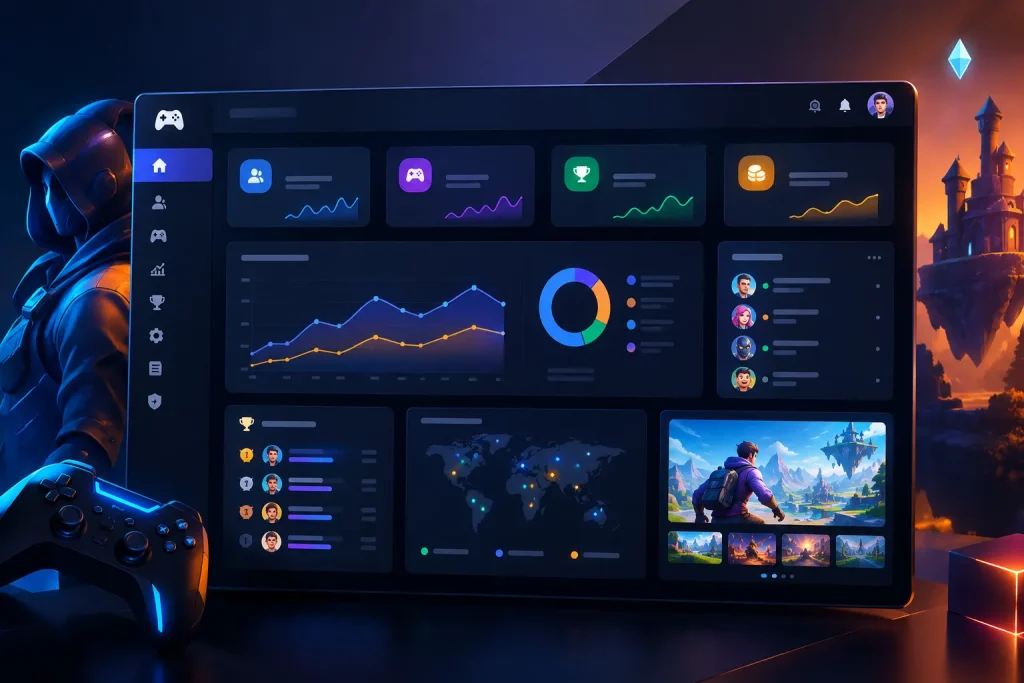
Create a centralized player management area where authorized administrators can view profiles, registration information, activity records, progression, status, and relevant account data. Search, filters, sorting, and structured records make large player databases easier to operate.
Player & Account Management
Give administrators practical control over game settings without repeatedly changing application code for routine configuration. Depending on your architecture, the dashboard can manage modes, levels, rewards, parameters, content values, availability, and other configurable game elements.
Game Configuration Controls
Transform raw gaming data into understandable metrics through charts, KPIs, activity summaries, player trends, match statistics, and performance indicators. A well-designed analytics layer helps teams identify changes in engagement and platform activity faster.
Live Analytics & Performance
Different team members require different levels of access. We can implement role-based permissions so administrators, managers, support staff, moderators, and other authorized users see only the tools and information relevant to their responsibilities.
Role-Based Administration
For competitive games, centralized management of matches, events, rooms, tournaments, schedules, participants, results, and status can simplify daily operations. Custom workflows can be designed around your game’s rules and operational requirements.
Match, Event & Tournament Management
Make important operational information easier to review with structured reports, filtering, historical records, and export capabilities. Depending on requirements, dashboards can support downloadable data for business analysis, operational reviews, reconciliation, or internal reporting.
Reports, Records & Data Export
Powerful Features for a Modern Game Management Dashboard
Why Dashboards Matter for rowing Gaming Platforms
A gaming dashboard is more than a collection of graphs. It is the operational layer that connects business teams with the systems running the game. When designed correctly, it gives administrators a clear view of what is happening and provides controlled tools to respond without unnecessary technical intervention.
Generic dashboards can be useful for basic projects, but growing gaming platforms often develop requirements that standard interfaces cannot accommodate. Your game may need a particular player workflow, custom permissions, specialized reporting, live configuration, event controls, or integrations with existing APIs. A custom dashboard allows these requirements to become part of the platform architecture instead of forcing your team to work around software limitations.
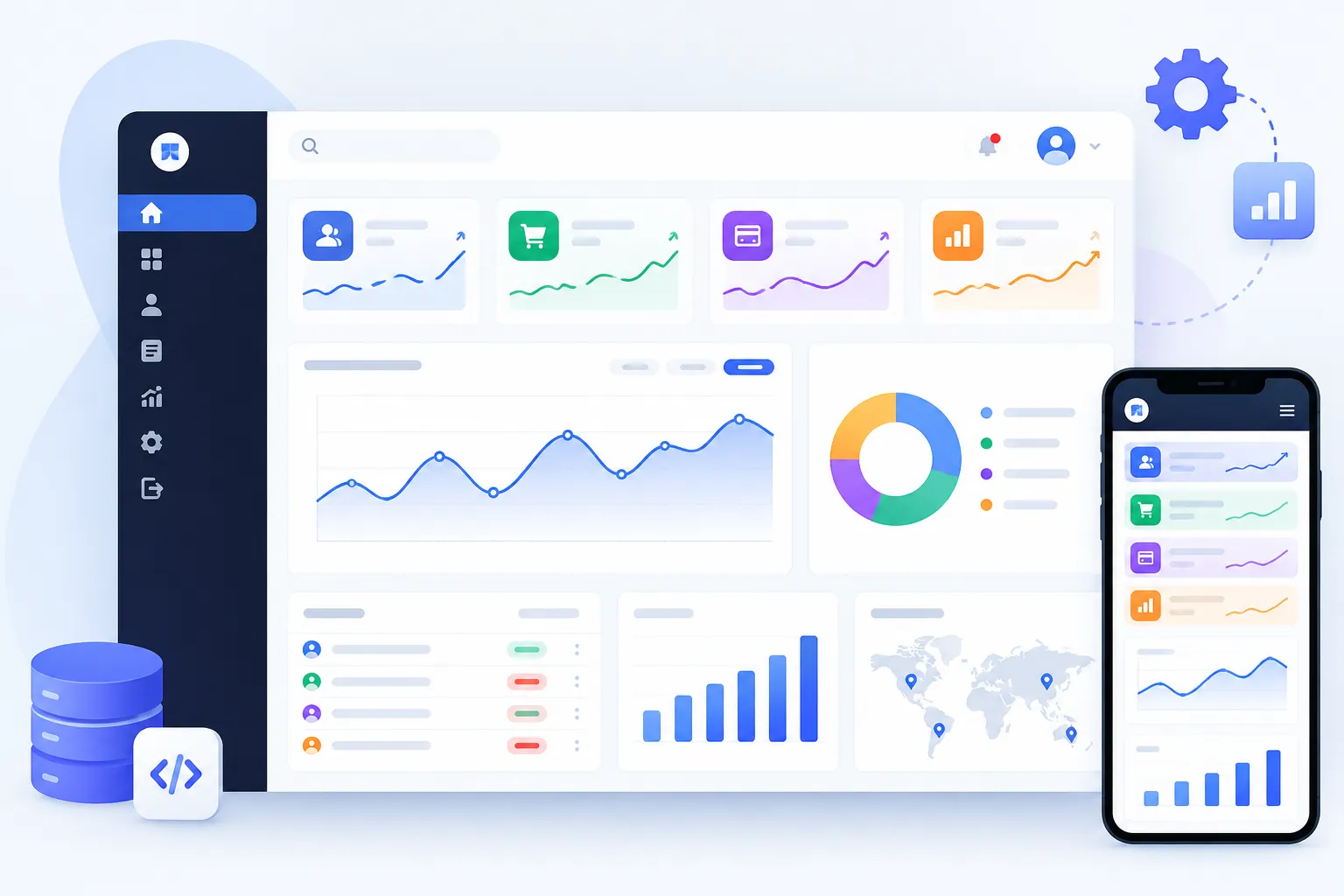
Advanced Capabilities We Can Integrate Into Your Game Dashboard
Monitor important game activity through live or near-real-time dashboard components. Depending on your infrastructure, administrators can observe active sessions, matches, player activity, system events, server information, and other operational signals.
Real-Time Game Monitoring
Create management interfaces for rewards, achievements, levels, bonuses, campaigns, and progression rules. Administrators can organize game incentives while keeping configuration structured and easier to maintain.
Rewards & Progression Management
Protect administrative functionality with secure authentication, session controls, role-based authorization, and permission boundaries. Sensitive actions can be restricted to authorized roles and supported by activity records where required.
Secure Authentication & Permissions
Connect the dashboard with your existing backend services, databases, APIs, authentication systems, analytics infrastructure, payment-related systems, or third-party services. This allows the dashboard to become part of your existing technology ecosystem.
API & Backend Integration
A management system should remain usable across different screen sizes. We can create responsive dashboard interfaces that adapt layouts, tables, cards, charts, navigation, and controls for desktop, tablet, and suitable mobile workflows.
Responsive Dashboard Experience
Your dashboard should not become a limitation when the game grows. We plan data structures, APIs, components, permissions, and frontend architecture with future expansion in mind, making it easier to add new game modes, users, reports, integrations, and management functions.
Scalable Architecture
Frequently Asked Questions?
A custom game dashboard can manage players, profiles, game settings, matches, tournaments, rewards, leaderboards, content, notifications, reports, analytics, permissions, support workflows, and other features depending on the game’s architecture.
Yes. A multiplayer game dashboard can include player management, active-session monitoring, matchmaking information, rooms, matches, tournaments, leaderboards, moderation tools, analytics, and administrative controls according to the platform’s backend and game logic.
Yes. Configurable game settings can be exposed through secure administrative controls. Examples can include game modes, event settings, rewards, progression values, content availability, and other parameters that your architecture supports.
Let's Connect
Ready to Start Your Project?
Let’s discuss how we can help bring your vision to life with our expertise.