
Build. Play. Scale.
Custom Unity Game Development Services<
Turn an original game concept into a polished, scalable, and engaging digital experience with custom Unity game development services from Amunis Technologies. We build tailored 2D and 3D games around your gameplay vision, target audience, platform requirements, visual direction, and business objectives.
A successful game needs more than attractive graphics. It requires responsive controls, thoughtful mechanics, stable architecture, optimized assets, intuitive interfaces, efficient loading, reliable networking where required, and a development process that can adapt as the product evolves. Our custom Unity game development services bring these elements together around one clearly defined product vision.
We begin by understanding what you want players to experience. Your concept may start as a document, sketch, prototype, existing Unity project, or partially completed game. From there, we can define gameplay requirements, technical architecture, platform targets, visual direction, core features, and production priorities. Unity supports both 2D and 3D game creation, making it suitable for a broad range of interactive experiences.
Turn Your Game Concept Into a Production-Ready Experience
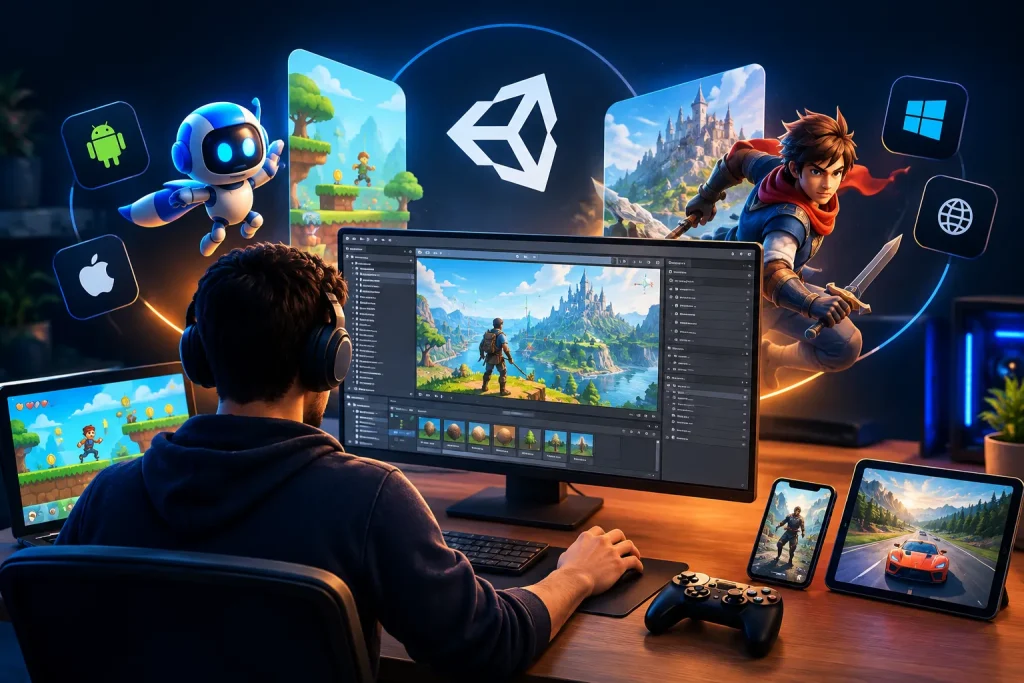
We create purpose-built 2D and 3D games with gameplay systems, character interactions, environments, animations, physics, interfaces, progression mechanics, and platform-specific functionality aligned with your product vision.
Custom 2D & 3D Game Development
We translate your gameplay idea into functional systems such as movement, combat, scoring, levels, inventory, missions, rewards, player progression, AI behavior, physics interactions, and interactive environments designed around your game concept.
Gameplay Mechanics & Systems
For online games, we can structure multiplayer features around the required player experience, including rooms, matchmaking, synchronization, player profiles, leaderboards, competitive modes, social interactions, and supporting backend integrations.
Multiplayer & Real-Time Experiences
We prepare Unity projects for appropriate target platforms such as Android, iOS, Windows, WebGL, and other supported environments while adapting controls, interface layouts, performance settings, assets, and build requirements for each platform.
Cross-Platform Unity Development
We focus on identifying technical bottlenecks before launch through testing and optimization. This can include frame-rate improvements, memory management, asset optimization, loading performance, device compatibility, bug fixing, and stability checks.
Performance, QA & Optimization
Game development does not end when the first build is published. We can support deployment preparation, fixes, feature enhancements, compatibility updates, performance improvements, and technical maintenance as your product continues to evolve.
Launch, Updates & Technical Support
What Our Custom Unity Game Development Services Include
A Development Approach Built Around Your Game, Not a Template
Every game has different technical requirements. A casual 2D mobile title does not need the same architecture as a networked multiplayer 3D experience, while an educational simulation may prioritize interaction and usability over competitive gameplay. That is why our development process begins with the product rather than a fixed service package.
Our team can work through the major stages of a game project, including discovery, planning, prototyping, development, integration, testing, optimization, deployment, and ongoing improvement. During planning, we identify the core gameplay loop and separate essential launch features from future enhancements. This helps create a clearer production roadmap while reducing unnecessary development complexity.
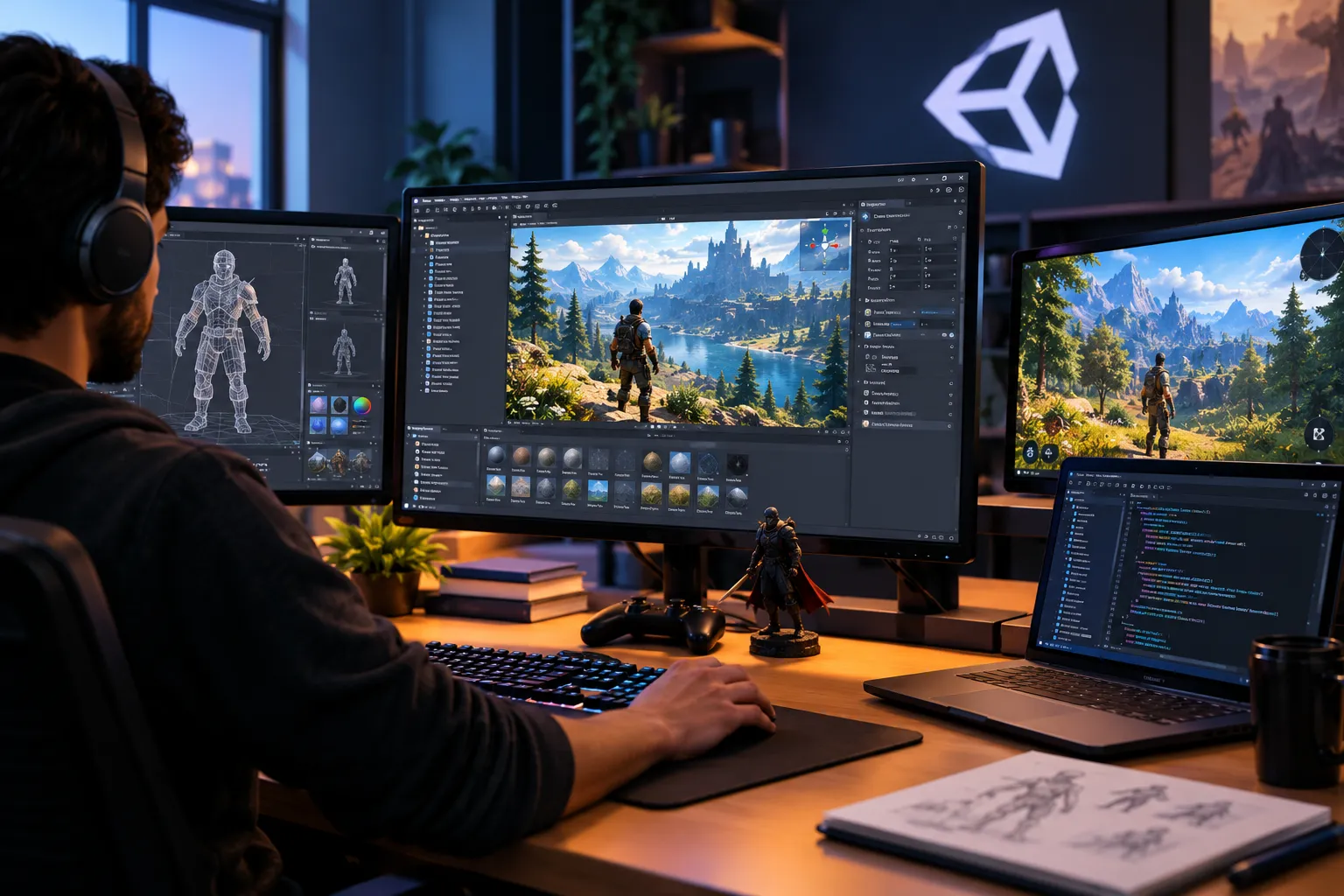
The Value of Building Your Game From the Ground Up
Instead of adapting your concept to an existing template, custom development allows mechanics, controls, progression, interfaces, difficulty, and interactions to be designed around your intended players.
Gameplay Designed Around Your Audience
Unity provides a flexible development environment, but successful implementation still depends on architecture and technical decisions. We structure development around the project’s platforms, features, performance requirements, and expected future growth.
Technology Selected Around Project Requirements
Game concepts frequently change during development. A custom architecture makes it easier to introduce new mechanics, content, interfaces, modes, integrations, and gameplay improvements without treating every change as a completely separate product.
Flexible Scope for New Ideas
A visually impressive game still needs responsive gameplay. We consider asset sizes, rendering requirements, memory usage, loading behavior, device capabilities, and other performance factors throughout development rather than leaving optimization until the final stage.
Performance Considered From the Start
When a project targets more than one platform, each build can have different requirements. We account for screen sizes, controls, hardware capabilities, input methods, performance expectations, and platform-specific considerations during implementation.
Built for Multiple Distribution Channels
A game can evolve after launch through new levels, characters, events, gameplay modes, improvements, and technical updates. A maintainable Unity project gives your product a stronger foundation for future development instead of treating launch as the final milestone.
A Foundation for Long-Term Growth
Frequently Asked Questions?
Unity can be used for many types of interactive products, including 2D games, 3D games, mobile games, multiplayer experiences, educational games, simulation products, casual games, action games, puzzle games, racing experiences, and interactive applications. The appropriate technical approach depends on the game’s mechanics, target audience, platforms, and performance requirements.
Yes. A project can begin with a basic concept, gameplay document, wireframe, prototype, reference material, or existing project. The development process can then translate that idea into gameplay systems, interfaces, environments, technical architecture, and a production-ready Unity project based on the agreed requirements.
Unity supports development for multiple platforms, but a cross-platform project still requires platform-specific testing and optimization. Controls, interface layouts, graphics settings, input systems, performance characteristics, and deployment requirements may need to be adapted for each target environment.
Let's Connect
Ready to Start Your Project?
Let’s discuss how we can help bring your vision to life with our expertise.