
Plan. Build. Deliver.
Construction Management App Development for Smarter Project Execution
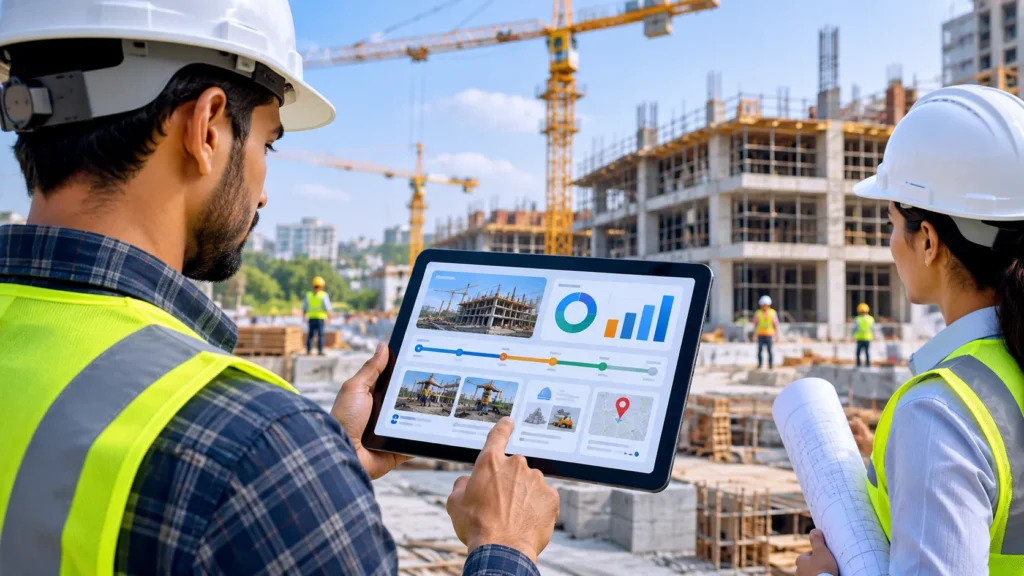
Construction Management App Development helps builders, contractors, developers, and infrastructure companies manage project activities through a connected digital platform. We create custom construction applications that bring site progress, workforce coordination, material movement, project schedules, expenses, and reporting into one organized system.
Managing a construction project involves coordinating people, materials, equipment, schedules, documents, budgets, and site responsibilities. When these activities are recorded through separate spreadsheets, paper registers, phone calls, and messaging groups, important information can become difficult to track. Project managers may struggle to identify delayed activities, site engineers may spend valuable time preparing reports, and business owners may lack a clear overview of ongoing work. A dedicated construction management application creates a structured way to record, share, and review project information.
Our approach focuses on practical digital workflows rather than unnecessary complexity. Site teams should be able to submit updates quickly, managers should be able to review progress clearly, and authorized users should have access to the information relevant to their responsibilities.
Construction Management App Development Construction Management App Development
Organize project phases, work packages, milestones, dependencies, and assigned responsibilities. Track planned versus actual progress to identify schedule deviations and coordinate activities before delays affect subsequent construction stages.
Project Planning and Schedule Management
Record daily construction activities, completed quantities, site observations, photographs, and work-related updates. Structured digital reports help project managers review site performance without repeatedly collecting information through disconnected communication channels.
Daily Site Progress and Reporting
Track material requests, purchase orders, deliveries, stock movements, and consumption across construction locations. Maintain organized records to support procurement planning, reduce avoidable shortages, and improve visibility into material availability.
Material and Inventory Management
Manage worker records, attendance, assigned teams, contractor details, and activity responsibilities. Clear workforce information helps supervisors understand site availability, coordinate labour requirements, and maintain consistent operational records.
Workforce and Contractor Coordination
Record project expenses, approved purchases, contractor payments, and budget utilization through defined workflows. Financial dashboards help authorized managers review spending patterns and investigate differences between planned and actual costs.
Budget, Expense, and Payment Tracking
Store drawings, specifications, work orders, inspection records, and approval documents in organized project folders. Version-aware document handling helps teams identify current information and maintain traceable records for important project decisions.
Project Documents and Approval Management
Six Essential Features of a Modern Six Essential Features of a Modern
Custom Construction Management App Development for Real Construction Workflows
Construction businesses rarely operate with identical processes. A residential builder may require apartment-wise progress, possession tracking, contractor coordination, and customer updates. A civil contractor may prioritize work quantities, equipment allocation, labour productivity, and measurement records. An infrastructure company may need milestone monitoring, technical documentation, inspection workflows, and reporting across multiple project locations. A useful construction application should reflect these operational differences instead of forcing every business into a generic software structure.
Our development process begins with understanding your project lifecycle, existing management practices, user roles, and business objectives. We identify the activities that require digital tracking, define the information each team needs, and map how records should move between site operations and management. This discovery stage helps establish a practical feature scope and reduces the risk of developing modules that do not support your actual workflow.

Advanced Construction App Features for Better Site and Office Coordination
Display project status, milestone completion, pending activities, and selected operational indicators in a centralized dashboard. Managers can review important updates across multiple sites without manually combining separate reports.
Real-Time Project Dashboards
Maintain equipment records, allocation details, usage logs, maintenance schedules, and availability information. Organized asset tracking helps teams plan equipment requirements and identify maintenance responsibilities before operations are disrupted.
Equipment and Asset Management
Create inspection checklists, quality observations, safety records, corrective actions, and incident reporting workflows. Digital documentation supports consistent site procedures and helps authorized teams review outstanding compliance-related activities.
Quality Inspection and Safety Workflows
Configure notifications for overdue tasks, pending approvals, material requests, schedule changes, and other defined events. Automation helps reduce repetitive follow-ups while preserving appropriate review and approval responsibilities.
Automated Alerts and Approval Workflows
Manage different projects, locations, teams, and reporting structures through a common application. Role-based project access allows users to focus on their assigned sites while management maintains broader operational visibility.
Multi-Project and Multi-Site Management
Connect suitable accounting systems, procurement tools, CRM platforms, reporting services, and external applications through supported interfaces. Modular development makes future features easier to introduce as project complexity and business requirements grow.
Custom Integrations and Scalable Architecture
Frequently Asked Questions?
Features may include project scheduling, daily progress reports, material tracking, labour management, contractor coordination, expense records, document management, inspection checklists, notifications, and dashboards. The final feature set depends on your construction business requirements and project scope.
Yes. A properly planned application can manage multiple projects, construction locations, teams, and reporting structures. Access permissions can be configured so site engineers, project managers, contractors, and administrators view or update information relevant to their responsibilities.
Yes. The application can be designed for mobile-friendly use, allowing authorized users to submit site updates, record attendance, upload photographs, review tasks, and access relevant project information. Offline capabilities can also be evaluated when site connectivity is unreliable.
Let's Connect
Ready to Start Your Project?
Let’s discuss how we can help bring your vision to life with our expertise.