
Stories That Adapt
AI Dynamic Storytelling Games Built for Limitless Player Experiences
Our game development team creates intelligent storytelling systems that combine artificial intelligence, interactive gameplay, adaptive characters, and persistent world logic to make every session feel more personal.
Traditional games usually rely on predefined dialogue, scripted quests, and carefully controlled story branches. While these systems can deliver excellent narratives, they can also restrict player freedom. AI Dynamic Storytelling Games introduce a more flexible model in which gameplay information can influence what happens next.
An AI storytelling engine can evaluate the current game state, previous decisions, character relationships, objectives, inventory, location, and player behavior before generating or selecting the next narrative event. This creates a stronger connection between gameplay and storytelling. A player’s earlier decision can influence a later conversation, change an NPC’s attitude, unlock an unexpected quest, or alter the direction of a larger storyline.
Turn Player Decisions Into Living Stories
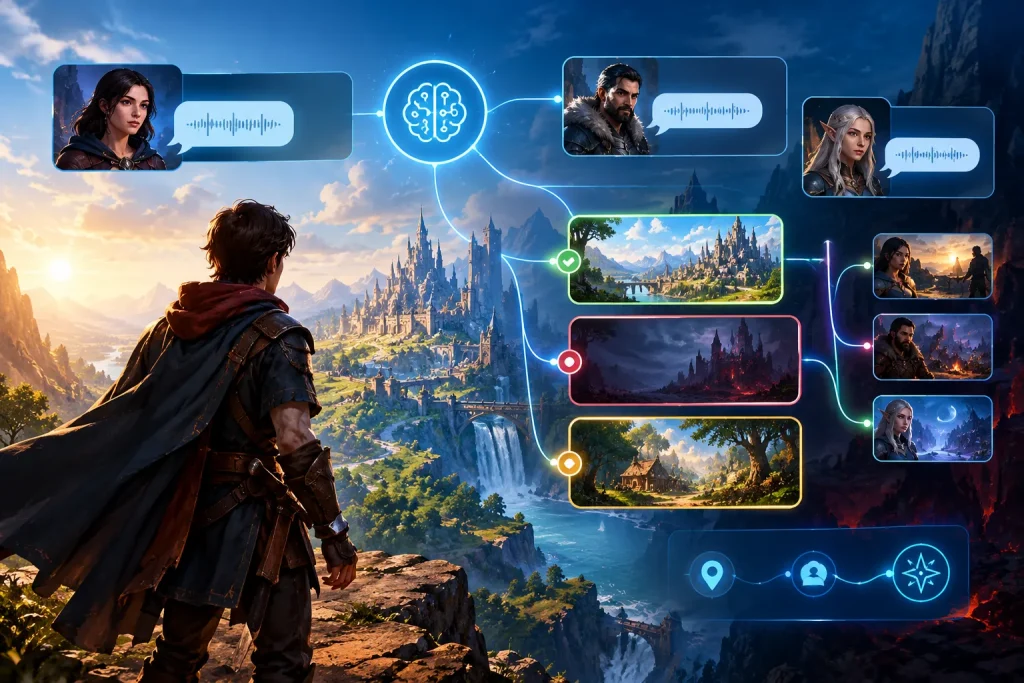
Description: Player choices can influence quests, conversations, challenges, relationships, and endings, creating narrative paths that respond naturally instead of following one fixed sequence.
Adaptive Story Paths
Description: AI-powered characters can respond according to personality, history, relationships, current events, and player actions, making interactions feel less predictable and more believable.
Intelligent NPC Behavior
Description: Important interactions can be stored and retrieved later, allowing characters to remember promises, conflicts, discoveries, alliances, and previous player decisions.
Persistent Character Memory
Description: AI can help create context-aware missions, objectives, encounters, and complications that fit the current world state while maintaining your game’s narrative direction.
Dynamic Quest Generation
Description: The storytelling engine can adapt content according to player preferences, behavior, progression, decisions, and playstyle to create experiences that feel individually designed.
Personalized Gameplay
Decisions can produce different consequences rather than cosmetic changes, giving players stronger agency and encouraging experimentation across multiple playthroughs.
Multiple Meaningful Outcomes
What Makes AI Storytelling Games More Interactive?
How can AI storytelling improve game replayability?
The biggest advantage of AI-driven storytelling is not simply producing more dialogue. It is creating a game environment capable of responding intelligently to what players actually do. This can make gameplay feel more personal while reducing dependence on enormous collections of manually authored variations.
For game studios and product companies, adaptive storytelling can support stronger replayability. Players may return to explore different decisions, discover alternative character relationships, test different strategies, or experience new narrative situations. This creates opportunities for longer engagement without requiring every possible scenario to be individually scripted from the beginning.

Features We Can Build Into Your AI Storytelling Game
Develop a centralized storytelling layer that interprets gameplay context and determines suitable dialogue, events, narrative beats, or consequences.
AI Narrative Engine
Give every major character defined motivations, traits, relationships, memories, goals, and behavioral rules that influence their responses.
Character Personality Systems
Track locations, missions, inventory, relationships, discoveries, player reputation, completed events, and other variables that affect future storytelling.
World-State Tracking
Allow players to communicate through flexible text or voice interactions instead of restricting every action to predefined dialogue buttons.
Natural Language Interaction
Connect storytelling systems with image-generation workflows to produce contextual scenes, character visuals, locations, items, or memorable story moments.
AI-Generated Visual Content
Monitor player choices, narrative paths, retention signals, popular characters, quest engagement, and other gameplay patterns to improve future experiences.
Analytics & Player Insights
Frequently Asked Questions?
An AI storytelling system typically receives information about the current game state before producing a narrative response or selecting the next event.
Yes. We can develop customized AI-powered game experiences according to your gameplay concept, target platform, audience, genre, and technical requirements.
Yes. AI characters can be designed with memory systems that store relevant information from earlier interactions.
Let's Connect
Ready to Start Your Project?
Let’s discuss how we can help bring your vision to life with our expertise.