
Imagine. Create. Explore.
3D Game Environment Design and Development for Immersive Gaming Worlds
3D game environment design and development transforms creative concepts into interactive worlds where every location, structure, object, and visual detail contributes to the gameplay experience. At Amunis Technologies, we create customized 3D game environments that combine artistic direction, detailed modeling, realistic materials, engaging landscapes, and performance-focused development.
A memorable gaming experience is created through more than characters and gameplay mechanics. The surroundings in which players explore, compete, interact, and complete challenges have an equally important role. 3D game environment design and development brings these surroundings together through carefully planned landscapes, architectural structures, environmental objects, textures, lighting, and interactive elements. Every visual component contributes to the identity of the game world, helping players understand their surroundings and become more connected with the experience.
Whether it is an adventurous fantasy kingdom, a realistic racing circuit, a modern city, or a competitive badminton arena, the environment should support the game’s visual direction and gameplay objectives. Well-designed environments also establish a consistent atmosphere, guide player movement, create opportunities for exploration, and make individual game locations feel meaningful rather than simply decorative.
3D Game Environment Design and Development That Brings Virtual Worlds to Life
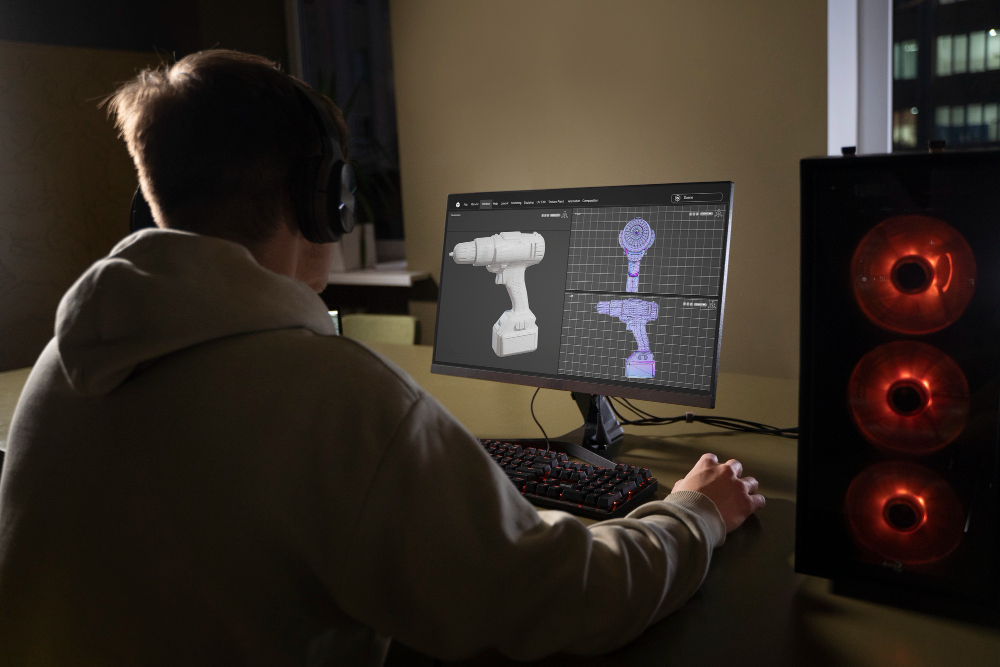
Transform initial ideas into structured environment concepts through visual references, location planning, artistic direction, and spatial layouts that establish a consistent identity for gameplay.
Environment Concept and World Planning
Develop buildings, landscapes, furniture, vehicles, natural elements, and decorative objects with appropriate geometry, proportions, and visual details for the intended gaming experience.
Detailed 3D Modeling and Asset Creation
Apply carefully designed surface materials, texture details, and physically based rendering properties to create believable environments while maintaining consistency across different objects and locations.
Realistic Textures and Material Development
Organize pathways, obstacles, structures, and environmental objects to support player movement, camera visibility, exploration, and gameplay interactions within carefully arranged virtual spaces.
Interactive Level Layout and Scene Composition
Create visual depth through lighting direction, shadows, atmospheric effects, weather conditions, and environmental color schemes that establish the intended mood of each game location.
Dynamic Lighting and Environmental Atmosphere
Prepare environment assets using suitable polygon budgets, texture sizes, level-of-detail systems, and collision settings to support efficient rendering across selected gaming platforms.
Game-Ready Asset Optimization
Essential Elements Behind Professional 3D Game Environment Creation
Build Distinctive Game Worlds With Custom 3D Environment Development
Every game has a different visual identity, gameplay structure, and technical requirement. A realistic racing game needs carefully constructed roads, surrounding buildings, track boundaries, and environmental details that maintain a believable sense of speed. An adventure game may require expansive landscapes, hidden pathways, ancient structures, and atmospheric locations that encourage exploration. A sports game needs accurate playing surfaces, audience surroundings, equipment, lighting, and camera-friendly layouts that support competitive gameplay. This is why environment development should begin with the game’s concept rather than relying on generic asset collections.
Our 3D environment production approach considers the complete journey from initial concept to implementation within the selected game engine. Depending on the project, development can include environment references, greybox layouts, modular asset creation, high-detail and optimized models, UV mapping, material creation, texturing, lighting, and scene assembly.

Advanced 3D Game Environment Features for Engaging Gameplay Experiences
Create reusable building components, platforms, walls, props, and environmental pieces that allow developers to construct multiple locations efficiently while maintaining consistent visual quality.
Modular Environment Asset Systems
Design mountains, forests, beaches, rivers, grasslands, and other natural surroundings with suitable surface materials, elevation details, vegetation, and environmental transitions.
Terrain and Natural Landscape Development
Introduce changing environmental conditions such as rain, fog, sunlight, nighttime lighting, and atmospheric variations to create additional visual depth and environmental diversity.
Weather and Day-Night Environment Effects
Adapt environmental models, textures, lighting, and rendering configurations to the performance requirements of mobile devices, desktop computers, consoles, and other supported platforms.
Platform-Specific Environment Optimization
Develop suitable environmental interactions such as movable objects, doors, destructible structures, animated surroundings, and trigger-based elements that connect the environment with gameplay systems.
Interactive Environmental Objects and Elements
Prepare and integrate environment assets into supported game-engine workflows with suitable materials, object organization, collision configurations, lighting setups, and technical validation.
Unity and Unreal Engine Integration
Frequently Asked Questions?
Yes. Mobile game environments can be designed with appropriate geometry, texture resolutions, materials, lighting, and rendering configurations. Optimization requirements depend on the target devices, expected visual quality, and selected game engine.
Unity and Unreal Engine are commonly used for real-time 3D game environments. The appropriate engine depends on gameplay requirements, visual objectives, platform compatibility, development architecture, and the technical scope of the project.
Depending on the project scope, services can include concept planning, environment modeling, prop creation, terrain development, UV mapping, texturing, material creation, lighting, scene assembly, optimization, and game-engine integration.
Let's Connect
Ready to Start Your Project?
Let’s discuss how we can help bring your vision to life with our expertise.