
Discover. Index. Grow.
Website Indexing Solution for Faster Search Visibility
A professional website indexing solution helps businesses identify why important pages are not appearing in Google Search and improve the technical signals that support discovery, crawling, and indexing.
A strong website indexing solution starts by understanding that indexing is more than submitting a URL to Google Search Console. Search engines need to discover a page, access its resources, process its content, understand its signals, and decide whether that page should be included in the search index. Google recommends using tools such as URL Inspection, Page Indexing reports, and XML sitemaps to diagnose and support this process.
For businesses publishing service pages, blogs, landing pages, product pages, or location-based content, indexing problems can quietly reduce SEO performance. A page may exist publicly but remain invisible in search because of a noindex directive, incorrect canonical, blocked crawling, weak internal linking, poor site architecture, duplicate content, server errors, or insufficient content value.
Why a Website Indexing Solution Matters for Organic Growth
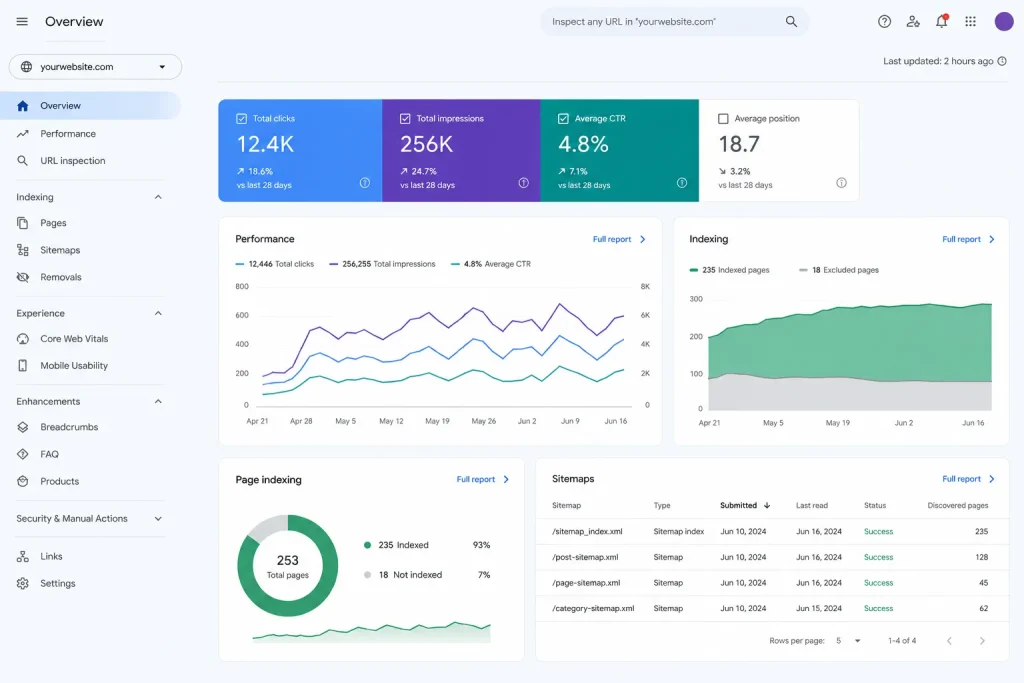
We examine important URLs, HTTP responses, robots.txt directives, XML sitemap inclusion, internal links, canonical tags, redirects, metadata, and indexing directives to uncover technical barriers.
Indexing & Crawlability Audit
We analyze Page Indexing and URL Inspection data to understand whether URLs are discovered, crawled, indexed, excluded, redirected, blocked, or affected by specific technical conditions.
Google Search Console Analysis
We review XML sitemaps to ensure important canonical URLs are represented accurately while unnecessary, redirected, duplicate, or non-indexable URLs are excluded from the primary sitemap structure.
Sitemap Optimization
We strengthen contextual internal links between relevant pages so important URLs become easier for crawlers and users to discover while creating a clearer website information architecture.
Internal Linking Improvements
We identify competing URLs and strengthen canonical signals so search engines can better understand which version represents the primary page within groups of similar or duplicate URLs.
Canonical & Duplicate Control
We monitor indexing patterns after technical improvements, helping identify newly excluded URLs, recurring crawl problems, unexpected canonical changes, and other issues before they become larger SEO problems
Ongoing Index Monitoring
How Our Website Indexing Solution Improves Search Discovery
Why Pages Are Not Getting Indexed by Google
Not every unindexed URL has the same problem. A newly published page may simply need time to be discovered, while another page could have a technical directive preventing indexing. Google specifically states that sitemaps can help it discover URLs but do not guarantee indexing or improve rankings by themselves.
One of the most important distinctions is between crawling and indexing. Googlebot can access a URL without ultimately adding that page to the searchable index. Likewise, blocking crawling with robots.txt is different from using noindex. Google explains that a noindex directive tells Google not to include accessible content in Search, while robots.txt controls whether crawlers can request resources.

6 Critical Factors Behind Better Website Indexing
A logical hierarchy helps search engines discover important pages efficiently. Clear navigation, descriptive URLs, contextual links, and organized categories reduce unnecessary complexity and create stronger pathways through the website.
Crawlable Website Architecture
Indexable pages should not accidentally contain conflicting robots directives, broken canonical references, inaccessible resources, problematic redirects, or server responses that prevent reliable crawling and processing.
Clean Technical Signals
Pages need a clear purpose and meaningful value for users. Thin, repetitive, automatically generated, or substantially duplicated pages may provide weaker reasons for search engines to retain them.
High-Value Original Content
Internal links connect related topics and help distribute contextual importance across your website. Important pages should not remain isolated from the site’s primary navigation and content ecosystem.
Strong Internal Linking
Google primarily uses the mobile version of website content for indexing and ranking. Responsive layouts, accessible content, stable rendering, and mobile-friendly navigation are therefore essential parts of modern technical SEO.
Mobile Accessibility
Slow responses, availability problems, server errors, and unreliable hosting can interfere with crawling. Google recommends monitoring crawl and availability issues when diagnosing crawling problems.
Consistent Performance
Frequently Asked Questions?
A website may not appear because it is new, difficult to discover, blocked from crawling, marked noindex, affected by technical problems, duplicated, poorly linked, or not considered sufficiently valuable for indexing.
An XML sitemap helps Google discover URLs, particularly on larger or newly launched websites, but submitting a sitemap does not guarantee that every URL will be indexed.
It generally means Google has crawled the URL but has not included it in the index at that time. The underlying reason can vary, so content quality, duplication, canonicalization, internal linking, and technical signals should be evaluated.
Let's Connect
Ready to Start Your Project?
Let’s discuss how we can help bring your vision to life with our expertise.